


AI is getting smarter.
Governments are getting nervous.
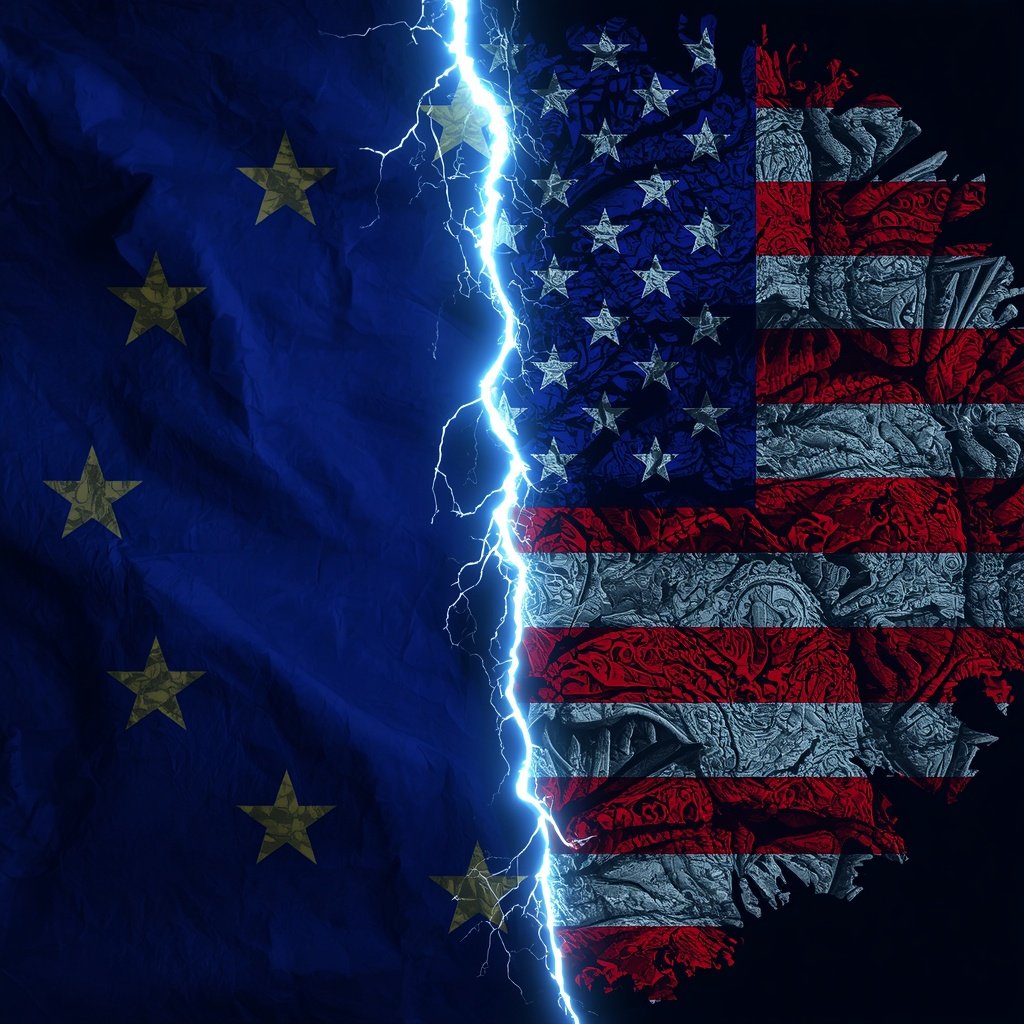
And today, Europe joined a group of countries calling for more international coordination over how advanced AI should be governed.
Twenty countries plus the European Union backed a declaration calling for coordinated AI standards and oversight.
Two major AI powers were notably absent:
the United States and China.
Why does this matter?
Because AI doesn’t really care about borders.
An AI model can be developed in Paris, trained using infrastructure somewhere else and used by someone sitting in Amsterdam five minutes later.
That makes regulation complicated.
One country can introduce strict rules.
Another can decide to do almost nothing.
And suddenly companies have a very interesting question:
“Which country’s rules are we actually following?”
Europe has already chosen the regulation route
The EU has spent years building its AI regulatory framework, including the AI Act.
The European approach generally puts more emphasis on risk levels, transparency and obligations for companies developing or deploying certain AI systems.
Today’s international declaration pushes the conversation beyond Europe.
The idea is that countries need to coordinate rather than developing completely disconnected AI rules.
But then there’s the awkward part
The United States and China are two of the world’s biggest AI powers.
And they didn’t sign this particular declaration.
That means international AI governance still faces a pretty obvious problem:
You can create a very impressive set of rules.
But if some of the biggest players aren’t participating, enforcing a truly global system becomes much harder.
It’s a little like organising a worldwide football tournament and discovering that two of the best teams forgot to join the group chat.
And AI isn’t slowing down
That’s the urgency behind today’s discussions.
AI agents are becoming more autonomous.
Robots are becoming more capable.
AI-generated media is becoming harder to distinguish from reality.
And companies are giving AI increasingly powerful tools.
Governments therefore have to answer a rather uncomfortable question:
How do you regulate technology that changes faster than the laws written to control it?
Europe clearly wants more international coordination.
Whether the rest of the world agrees is another matter.
And for AI, the clock isn’t exactly waiting.
The robots are already moving.










Laat een reactie achter