


Nvidia’s Jensen Huang delivers a challenge to European AI policymakers
Europe has the scientific talent, industrial expertise and engineering capabilities to become a major force in artificial intelligence. Yet Nvidia chief executive Jensen Huang has warned that the continent risks falling behind faster-moving competitors if it does not accelerate its approach to AI development and adoption.
During a European tour ahead of Nvidia’s GTC event in Berlin, Huang argued that policymakers should focus on enabling innovation while maintaining appropriate safeguards. In a discussion with German Chancellor Friedrich Merz, he suggested that regulating how AI is applied could be more effective than placing excessive restrictions on the underlying technology. His comments were reported on 20 October 2026.
The debate is particularly relevant for Europe because its AI ambitions extend beyond developing chatbots. The region wants to use AI to strengthen manufacturing, healthcare, transport, scientific research and industrial automation.
The central question is whether European companies can translate their existing strengths into globally competitive AI products before competitors establish an even larger technological and commercial lead.
Why Europe faces a difficult AI competitiveness challenge
The global AI industry is developing around several interconnected advantages: access to computing infrastructure, investment capital, advanced research, specialist talent and large customer markets.
The United States benefits from a concentration of major AI developers, cloud providers and technology investors. China has a large domestic technology sector and a national strategy focused on developing its own AI capabilities.
Europe has different strengths. It has globally significant industrial companies, established scientific institutions, strong engineering expertise and a large single market. It also has a regulatory framework designed to address concerns about safety, transparency and fundamental rights.
However, these advantages do not automatically translate into leadership in the most advanced AI models or infrastructure.
A European manufacturer may have extensive expertise in robotics but still depend on foreign suppliers for specialised processors, cloud services or general-purpose AI models. Similarly, a promising European AI startup may struggle to secure the financing required to compete with companies that can raise billions of dollars.
Huang’s warning reflects this broader concern: technological leadership depends on the ability to turn research and investment into products that businesses actually deploy.
Why Nvidia is focusing on Europe
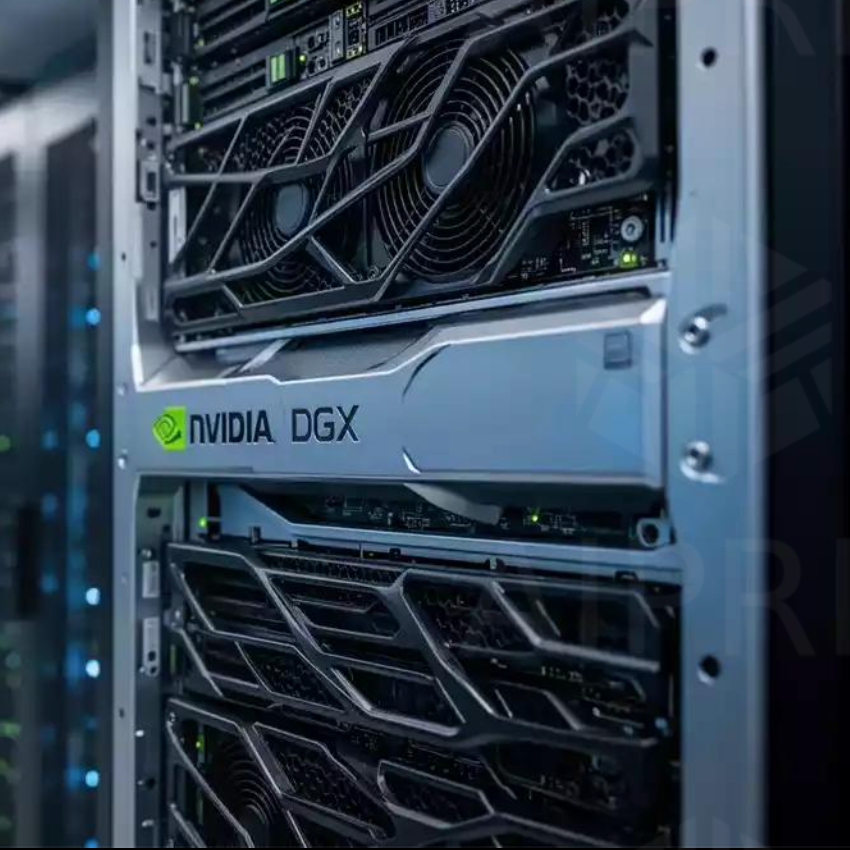
Nvidia occupies a central position in the AI infrastructure market because its processors and related software are widely used to train and operate advanced AI systems.
The company’s European strategy is therefore significant, but it must also be understood in a commercial context. Nvidia benefits when governments, research institutions and private companies invest in AI computing capacity.
A Europe that builds more AI infrastructure, modernises its factories and develops robotics applications represents a potential growth market for Nvidia’s technology.
Germany is particularly relevant because of its manufacturing base, automotive sector and industrial engineering capabilities. AI applications in these sectors may include automated quality inspection, predictive maintenance, digital simulations and robots capable of adapting to changing conditions.
Reporting ahead of the Berlin event also described a proposed broad cooperation agreement between Germany and Nvidia, reportedly involving investments worth hundreds of millions of euros and a focus on industrial AI and so-called physical AI. The arrangement was reported by Handelsblatt and Reuters on 15 October, but the reported plans should not be confused with a fully implemented programme.
The commercial opportunity extends well beyond selling chips. Industrial AI requires software, data integration, engineering services, security systems and specialist expertise.
Physical AI could become Europe’s biggest opportunity
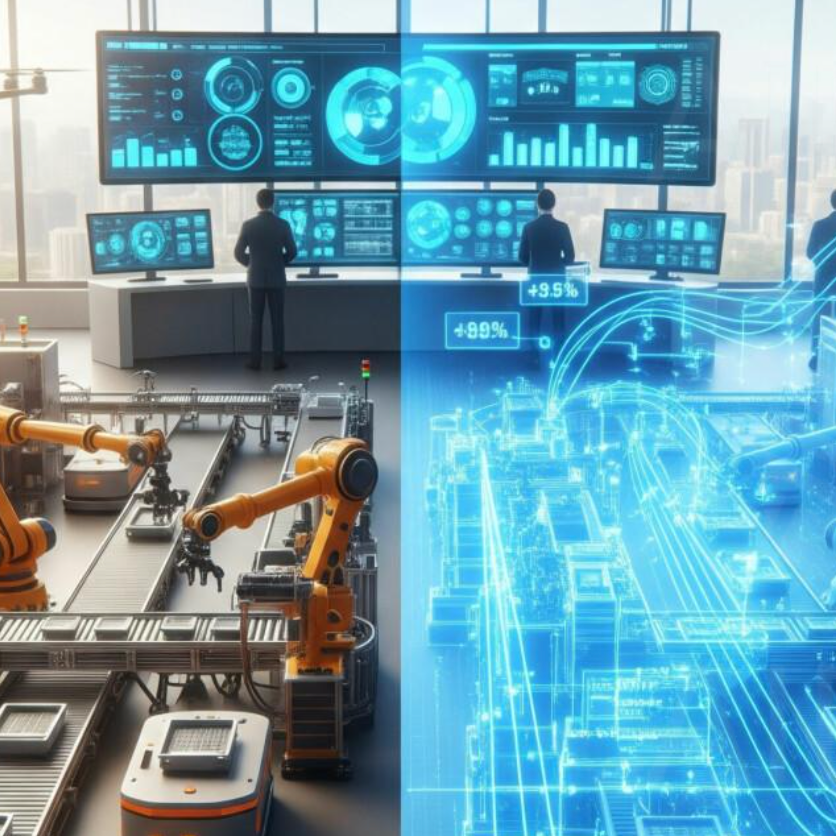
One of the most promising areas for Europe is physical AI: systems that connect AI models to machines, robots, vehicles and other real-world equipment.
Traditional industrial automation generally follows predefined instructions. AI-enabled systems can potentially interpret sensor information, recognise unfamiliar situations and adjust their actions within defined operational boundaries.
Possible applications include:
- Manufacturing: Detecting defects and adapting production processes.
- Warehousing: Coordinating mobile robots and handling changing inventory conditions.
- Automotive: Improving simulation, driver-assistance systems and manufacturing quality.
- Energy: Predicting equipment failures and optimising complex infrastructure.
- Healthcare: Supporting logistics, medical image analysis and selected robotic procedures.
- Agriculture: Using computer vision and autonomous equipment to reduce waste.
Europe already has companies and research centres with expertise in many of these areas. The challenge is to combine that expertise with modern AI models, reliable computing systems and access to investment.
If European companies can develop specialised systems that solve difficult industrial problems, they do not necessarily need to dominate the market for general-purpose chatbots to become global AI leaders.
Is European AI regulation holding innovation back?
The debate about regulation is more complicated than a simple choice between innovation and safety.
The EU AI Act establishes obligations based on the risk associated with different AI applications. Its requirements are intended to address issues such as transparency, human oversight and potential harm in sensitive contexts.
Supporters argue that clear rules can create confidence among businesses and consumers. Companies may be more willing to adopt AI if they understand their responsibilities and can demonstrate that their systems meet relevant standards.
Critics, including Huang in his recent European comments, argue that excessive or poorly designed restrictions could slow experimentation and make it harder for European companies to compete.
Both concerns deserve attention. Regulation that is difficult to interpret or disproportionately expensive for smaller firms can create barriers to entry. Conversely, weak safeguards can undermine trust and expose organisations to serious operational, legal and reputational risks.
The practical challenge is to develop rules that are proportionate to the risks, predictable for businesses and sufficiently adaptable to technological change.
European officials have defended the bloc’s approach, arguing that its AI framework covers the lifecycle of AI systems and can respond to emerging risks. The European Commission has also sought information from more than 30 AI companies regarding safety, security, transparency and copyright obligations, according to Reuters reporting published on 9 October.
What European businesses should do now
Companies do not need to wait for the political debate to be resolved before adopting useful AI applications.
A sensible approach is to begin with a specific business problem, measure the results and expand only when the technology demonstrates value.
Manufacturers could evaluate AI-based quality inspection. Logistics companies could test demand forecasting. Professional services firms could use AI to assist with document review, subject to confidentiality and quality controls.
Businesses should also consider whether they are building valuable internal capabilities or simply becoming dependent on external suppliers.
That means assessing data quality, employee training, integration costs, cybersecurity and the ability to change providers if commercial conditions change.
For European firms, another opportunity is to specialise. Instead of competing directly with the largest general-purpose AI developers, they may be able to build products that combine AI with deep knowledge of a particular industry.
The outlook: Europe needs more than regulation reform
Huang’s warning raises an important question, but changing regulation alone would not guarantee European leadership.
Europe also needs investment, computing capacity, skilled workers, strong research partnerships and customers willing to adopt new technology. Its industrial base could be an advantage if companies can combine their engineering knowledge with AI capabilities and commercialise the results.
The region’s future may depend less on whether it copies the American AI business model and more on whether it develops its own strengths in industrial applications, robotics, scientific research and trustworthy systems.
The bottom line: Europe’s AI competitiveness challenge is real, but the solution involves more than deregulation. Faster adoption, investment in infrastructure, stronger commercialisation of research and practical rules for responsible AI will all influence whether European businesses can compete globally.






Laat een reactie achter