

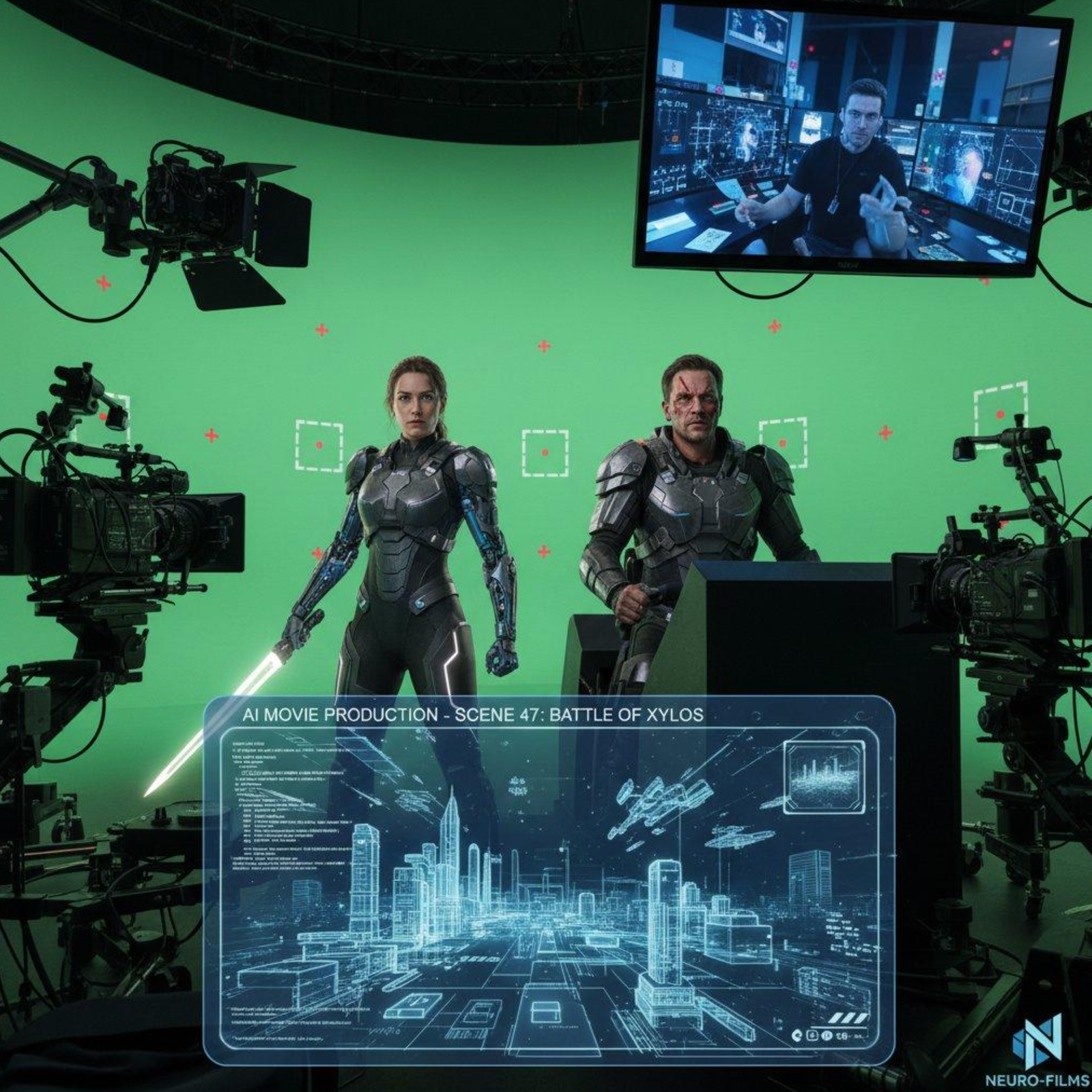
European actors are intensifying their campaign for stronger protections against the unauthorised use of their faces, voices and performances by artificial intelligence systems. The dispute is becoming one of the defining issues for the future of film and television, as production companies explore synthetic performers and increasingly realistic digital replicas.
In September, the UK’s performers’ union Equity renewed its call for stronger protections as the first anniversary of the AI-generated performer Tilly Norwood approached. Meanwhile, Estonia’s Actors’ Union raised concerns about proposed changes to European data protection rules that, it warned, could make it easier to use performers’ personal data in AI development.
The two developments reflect a broader disagreement over how the entertainment industry should adopt AI without undermining the rights and livelihoods of the people whose creative work makes it possible.
The Tilly Norwood controversy continues
Tilly Norwood, an AI-generated performer introduced in 2025, became a symbol of the tensions surrounding synthetic actors. Unlike a traditional performer, an entirely generated character can be developed without hiring a human actor to appear on set for the role itself.
Supporters argue that synthetic characters could offer filmmakers new creative possibilities, reduce certain production costs and make it possible to realise projects that might otherwise struggle to secure funding.
Actors and their representatives are concerned that studios could use the technology to reduce employment opportunities or reproduce elements of real performers’ identities without adequate permission or payment.
Equity has called for explicit protections in film and television contracts covering consent, transparency and remuneration. The union also wants stronger rights over people’s voices and likenesses, arguing that protection should not be limited to performers who already have substantial bargaining power.
The issue is particularly important for early-career actors, who may have less leverage when negotiating contracts and may find it difficult to challenge the use of their performances after signing broad agreements.
Estonia raises concerns about European data protection
The debate is also reaching European policymakers. In September, the Estonian Actors’ Union warned that proposed changes to the EU’s General Data Protection Regulation could weaken safeguards affecting performers’ faces, voices, likenesses and movement patterns.
The union argued that these characteristics can reveal information about an identifiable individual and may be used to create convincing digital replicas. It called for stronger safeguards and said performers should be asked for separate permission before their performances are used to train AI or generate new video.
The concerns relate to a wider policy question: how should European law distinguish between legitimate processing of information, AI training and the commercial reproduction of a person’s identity?
Data protection, copyright and personality rights overlap, but they do not necessarily protect the same interests. A performer might have concerns about the use of personal data even where a particular copyright question remains unresolved.
The final impact of proposed legislative changes depends on the text ultimately adopted and how the relevant rules are interpreted. The actors’ union’s warning is therefore a call for stronger safeguards, not proof that all AI training on performers’ data is or will become lawful without consent.
What performers want from studios
The campaign centres on several practical demands:
- Informed consent: performers should understand when their likeness or voice will be replicated and how the resulting material will be used.
- Fair compensation: contracts should establish how actors are paid when their digital replicas appear in productions.
- Transparency: performers should be told when AI is used to alter, generate or reproduce their performances.
- Limits on future use: permission for one project should not automatically become unrestricted permission for unrelated productions.
- Collective bargaining: unions want minimum standards that individual performers can rely on instead of having to negotiate every protection alone.
These safeguards would not necessarily prevent AI use. Instead, they would establish clearer rules for situations in which producers want to use synthetic performances alongside human actors.
Can AI create jobs as well as eliminate them?
The economic consequences remain uncertain. AI could create work for artists, editors, animators, voice specialists and technical teams responsible for producing and supervising synthetic media.
It could also lower production costs, allowing smaller studios to make projects that previously required much larger budgets.
However, lower costs do not guarantee that new jobs will compensate for any lost employment. The distribution of economic benefits matters: a studio may save money by generating a performance, while the actor who would otherwise have been hired receives neither a fee nor a share of the resulting revenue.
The challenge for the industry is to determine how productivity gains can coexist with sustainable careers and fair compensation.
Europe faces a policy choice
European governments are under pressure to balance technological innovation with protections for creators. Too little protection could undermine trust and make performers reluctant to participate in AI-assisted productions. Poorly designed restrictions, on the other hand, could create uncertainty for filmmakers and developers who want to use AI with permission.
The most durable approach may combine clear legislation, collective agreements, transparent production practices and enforceable contractual rights.
The debate also raises a question about audiences. Viewers may be willing to watch AI-generated characters, but their expectations about authenticity, disclosure and human performance may differ depending on whether they are watching a fictional film, a documentary or an advertisement.
Ultimately, the controversy over Tilly Norwood is about more than one digital character. It represents a struggle over who controls a performer’s identity in an industry where images and voices can increasingly be reproduced without a conventional performance.









Laat een reactie achter