


September 28, 2026
Europe has some of the world’s best universities.
It has world-class scientists.
It has major semiconductor expertise.
It has ambitious AI startups.
It has enormous industrial companies that could potentially benefit from artificial intelligence more than almost anyone else.
And yet, when the global AI race is measured by money, computing power, frontier models, startup creation and adoption, Europe is increasingly struggling to keep pace.
That is the uncomfortable reality emerging from the latest AI data.
The problem is not that Europe has no AI industry.
The problem is that Europe has not yet turned its AI potential into the kind of scale being achieved elsewhere.
The United States is spending vastly more on AI.
China is producing increasingly competitive models and enormous volumes of AI research and patents.
Meanwhile, Europe is still debating how to build enough computing infrastructure, how to finance its startups and how to get businesses to actually deploy AI at scale.
And that raises a much bigger question:
Could Europe enter the AI age with excellent technology — but without enough companies, capital and infrastructure to control the value it creates?
The numbers are difficult to ignore
The 2026 AI Index from Stanford University provides one of the clearest snapshots of the global AI landscape.
In 2025, US private investment in AI reached approximately $285.9 billion.
China followed at $12.4 billion.
The United Kingdom was at $5.9 billion, France at $4.36 billion and Germany at $3.89 billion.
Stanford’s data puts total private AI investment across Europe far below the United States, while US investment increased by more than 160% from 2024 to 2025. European private AI investment increased by only about 7.2% over the same period.
The difference is not subtle.
America is not merely investing more.
It is operating at a completely different financial scale.
And AI is a technology where scale matters enormously.
America has built an AI money machine
The United States has created a remarkable combination of venture capital, hyperscalers, semiconductor companies and frontier-AI laboratories.
Companies such as Microsoft, Google, Amazon and Meta can invest billions into AI infrastructure.
Specialized AI companies can raise enormous amounts of capital.
Investors can fund companies through multiple stages of development.
And successful companies can access some of the world’s deepest public markets.
The result is a feedback loop.
More capital creates more compute.
More compute enables larger models.
Better models attract more users.
More users generate revenue.
Revenue and valuations attract more investment.
And that investment funds even more infrastructure.
Europe is trying to build a similar ecosystem, but it is starting from a much smaller base.
China is no longer simply “catching up”
The old narrative was relatively simple.
America led.
China was catching up.
Europe was somewhere behind both.
That picture is now becoming outdated.
Stanford’s 2026 AI Index says the performance gap between leading US and Chinese models has effectively closed, with the two countries repeatedly trading the lead since early 2025. As of March 2026, Anthropic’s leading model had only a 2.7% advantage over the leading Chinese model on the benchmark tracked by Stanford.
China also leads the world in AI publication volume, citations, patent output and industrial robot installations, according to the report.
The United States, meanwhile, still leads in producing top-tier models, private investment and high-impact patents.
That leaves Europe in a difficult position.
It is not simply competing against one country.
It is competing against two enormous technology ecosystems that are investing at scale.
Europe does have something the US and China don’t have in the same way
The situation is not entirely negative.
Europe has major strengths.
The IMF’s latest analysis of Europe’s AI position notes that seven of the top ten countries in its AI preparedness index are European.
Denmark ranks second, while the Netherlands, Estonia, Finland and Germany also score strongly across areas including digital infrastructure, innovation, human capital and regulation.
That matters.
Europe is not technologically incapable.
The problem is that strong national performance does not automatically create a strong European technology industry.
Europe’s AI ecosystem remains fragmented across countries, languages, markets and investment systems.
A company that wants to scale across Europe can encounter a completely different environment from a US startup expanding across one large domestic market.
Europe has a commercialization problem
This may be the most important part of the story.
Europe is very good at research.
It has produced enormous amounts of scientific knowledge and has many highly regarded universities and research institutions.
But research does not automatically become a global technology company.
A European Commission report on the future of AI identifies fragmented markets, limited data access, skills shortages and investment gaps as constraints on AI adoption and competitiveness.
A German economic research institute similarly argues that Europe has struggled to translate innovation into commercialization compared with the United States and China.
This creates a strange paradox.
Europe can invent something.
Then another ecosystem can be better at turning that invention into a billion-dollar company.
The value does not necessarily stay where the research originated.
And now Europe has an adoption problem
The problem is not only building AI companies.
Europe also needs its existing companies to actually use AI.
A recent comparison of AI adoption in the United States and Europe found a significant gap.
In early 2026, 43% of US workers surveyed reported using AI for their jobs.
Across the European countries included in the study, the figure ranged from 36.3% in the UK to 25.6% in Italy.
More importantly, the researchers found that US workers were spending about 5.2% of total working hours using AI — roughly twice the share in the UK, Sweden and the Netherlands, and more than three times the share in Germany, France and Italy.
That second number may be more important than the first.
Using ChatGPT occasionally is not the same as rebuilding a company’s workflow around AI.
The real economic gains may come when companies redesign how work is performed.
And that is where the US appears to have moved faster.
Europe risks becoming a consumer of AI rather than a producer of it
This is the nightmare scenario.
Imagine that European companies increasingly use American and Chinese AI models.
European companies pay foreign cloud providers for computing.
European businesses depend on foreign AI chips.
European consumers use foreign AI assistants.
European developers build applications on foreign models.
The applications may be European.
The customers may be European.
The economic activity may happen in Europe.
But a significant portion of the underlying value could flow elsewhere.
Europe would still participate in the AI economy.
It just would not control much of the infrastructure underneath it.
That is why the debate around “AI sovereignty” has become much more serious.
Compute may be Europe’s biggest weakness
Artificial intelligence ultimately requires computing power.
And this is an area where Europe’s disadvantage becomes particularly obvious.
The United States hosts 5,427 data centres, more than ten times any other country, according to Stanford’s 2026 AI Index.
ECB President Christine Lagarde recently highlighted an even more dramatic difference, saying the United States accounts for around 75% of global AI computing capacity while Europe has approximately 5%.
Different measurements of “AI computing capacity” can produce different figures depending on what infrastructure is counted, so these numbers should not be treated as a single definitive global accounting.
But the direction is clear.
Europe has substantially less AI infrastructure than the United States.
And that matters because the next generation of AI will require even more compute.
Europe is now trying to build its way out
This explains the sudden focus on European AI factories.
The European Union is backing the development of large-scale AI computing infrastructure, including plans for up to seven AI gigafactories.
The strategy is intended to give European companies and researchers greater access to the compute required for advanced AI development.
At the same time, Europe is trying to expand its semiconductor industry and support European AI accelerators.
Companies such as Dutch AI-chip developer Axelera AI are part of that effort.
The strategy is becoming increasingly clear:
Europe wants its own models, its own compute, its own chips and its own companies.
But building all of those simultaneously is enormously expensive.
The capital problem comes back again
This brings Europe back to the biggest gap of all.
Money.
Stanford’s figures show just how large the difference has become.
In 2025, the United States produced 1,953 newly funded AI companies.
The UK had 172.
China had 161.
Germany had 92.
France had 84.
Italy had 38.
Spain had 33.
These numbers should not be interpreted as a complete measure of AI entrepreneurship — countries differ in reporting, market size and investment structures — but they show the enormous concentration of private AI financing in the US.
And AI companies increasingly require huge amounts of capital.
A promising European startup can build an excellent product.
But eventually it may need hundreds of millions of euros to compete internationally.
If that capital is easier to obtain in America, the company has a reason to look elsewhere.
Europe is trying to fix that too
This is why initiatives such as the new Scaleup Europe Fund are becoming strategically important.
The European Commission is building a €5 billion late-stage growth fund focused on strategic technologies including AI, semiconductors, robotics, quantum technologies and other advanced industries.
The EU says the fund is specifically designed to close Europe’s scale-up financing gap.
The idea is straightforward.
Europe does not necessarily need more startups.
It needs more startups that become enormous companies.
That means keeping companies alive through the expensive middle stage between “promising startup” and “global technology giant.”
But regulation is part of the debate too
Europe has also chosen a different approach to AI regulation.
The European Union’s AI Act has made Europe one of the world’s most important jurisdictions for AI regulation.
Supporters argue that clear rules can increase trust and create predictable standards.
Critics argue that European regulation can create additional compliance costs and slow innovation.
The evidence is more complicated than either extreme.
The IMF recently noted that European firms face regulatory burdens that can make scaling more difficult, alongside financing constraints and high electricity prices.
At the same time, the same IMF analysis notes that Europe performs strongly on regulation and ethics in its AI-readiness framework.
So Europe’s regulatory strength and its commercialization weakness can exist simultaneously.
The question is whether Europe can maintain the benefits of trustworthy AI rules without making it unnecessarily difficult to build and scale AI companies.
Europe’s biggest advantage may be the industry it already has
There is one major factor that is sometimes overlooked in the AI race.
Europe already has enormous industrial companies.
Automotive.
Chemicals.
Pharmaceuticals.
Manufacturing.
Energy.
Logistics.
Engineering.
Aerospace.
Robotics.
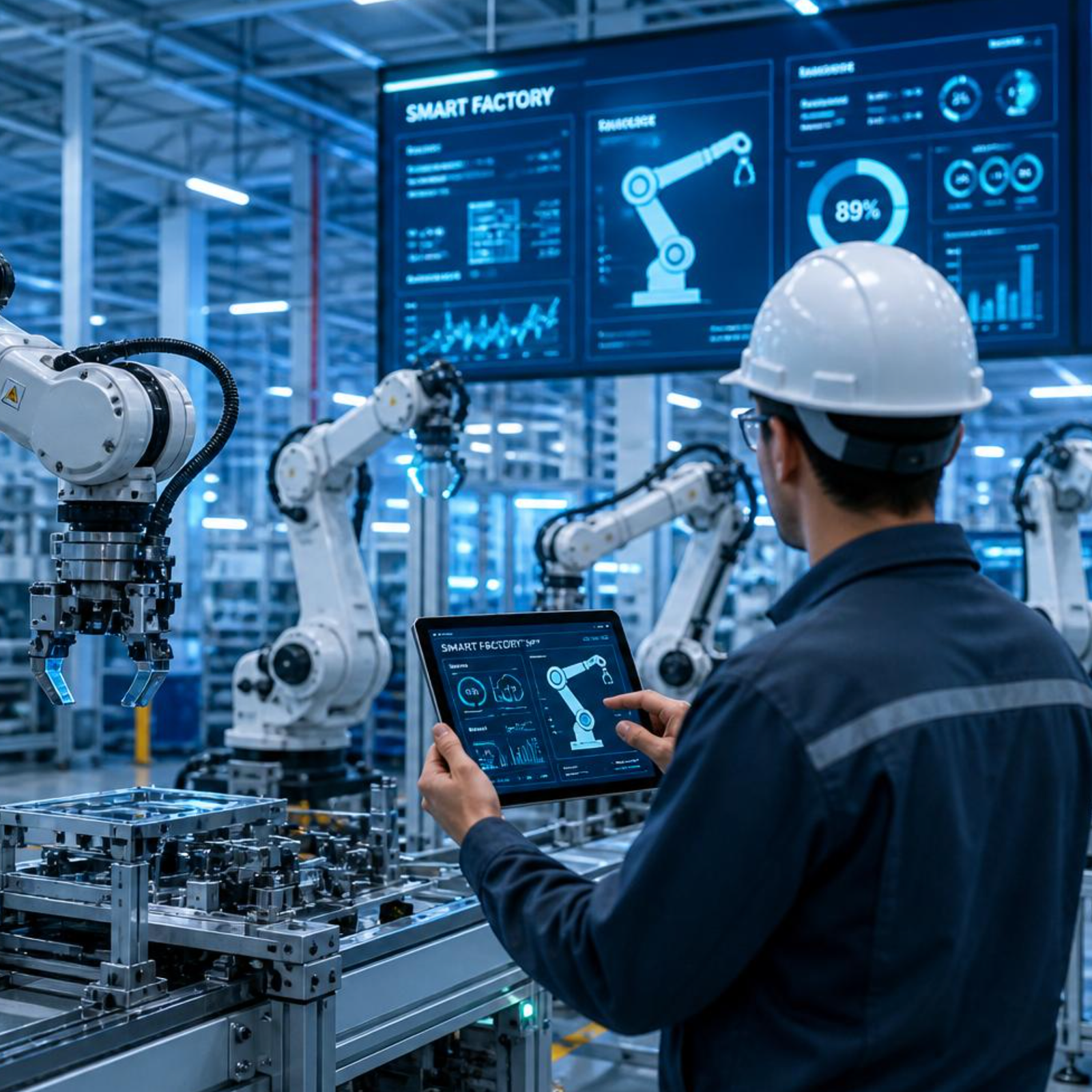
These industries generate huge amounts of economic activity and contain millions of potential AI use cases.
If European companies successfully integrate AI into these sectors, Europe could capture enormous productivity gains without necessarily producing the world’s largest consumer AI chatbot.
That may ultimately be Europe’s most realistic path.
Not beating America at everything.
Not copying China.
But combining AI with Europe’s existing industrial strengths.
The danger is waiting too long
This is where the current moment becomes important.
AI adoption is still relatively young.
The global AI economy is not finished.
Europe therefore has time.
But it also has a narrowing window.
Once companies, developers and capital become deeply concentrated in another ecosystem, reversing that concentration becomes much harder.
The same applies to infrastructure.
If the world’s largest AI clusters are built elsewhere, European companies will have to compete from a structural disadvantage.
And if Europe’s strongest startups are acquired before reaching global scale, the continent can end up supplying talent and technology without building enough technology giants of its own.
Europe is not out of the AI race
That would be an exaggeration.
Europe has leading AI researchers.
It has globally recognized companies such as Mistral.
It has important semiconductor expertise.
It has highly prepared countries.
It has major industrial customers.
It has growing AI infrastructure plans.
And it is now investing heavily in closing its compute and financing gaps.
The IMF’s analysis is particularly important here: Europe is not starting from a position of technological weakness across the board. Several European countries perform extremely well on AI preparedness.
The problem is the distance between potential and scale.
The uncomfortable question
The AI revolution is creating a new hierarchy in technology.
At the top are the companies controlling models, chips, cloud infrastructure and enormous amounts of capital.
Below them are companies building applications on those platforms.
And below that are the businesses simply consuming AI.
Europe risks becoming disproportionately concentrated in the third category.
That does not mean European companies will stop innovating.
It means that without faster commercialization, investment and adoption, Europe could generate some of the world’s best AI research while capturing a smaller share of the economic value created from it.
That would be a very European kind of AI paradox:
excellent science, excellent engineers, excellent infrastructure in parts of the continent — but not enough scale.
The AI race has barely begun
Perhaps the most important point is that the outcome is not decided.
The United States currently has an enormous lead in private AI investment and infrastructure.
China has rapidly closed the frontier-model gap and leads in several research and patent measures.
Europe is behind on several measures of scale, investment and adoption.
But the AI economy is still developing.
Europe is now trying to respond with more compute, more capital, more chips, more AI adoption and more support for scale-ups.
The next few years will show whether those efforts are enough.
Because the question for Europe is no longer whether it can participate in the AI revolution.
It clearly can.
The real question is whether it can move quickly enough to become one of the places where the AI revolution is actually built, financed and scaled.
And that may determine whether Europe enters the AI age as a technological power — or as one of the world’s largest markets for technologies created somewhere else.








Laat een reactie achter