


Europe needs to accelerate investment in artificial intelligence infrastructure if it wants to compete with the United States and other major technology powers, NVIDIA chief executive Jensen Huang warned during the company’s GTC conference in Berlin.
The message highlights a central problem facing Europe’s AI ambitions. The continent has established research institutions, industrial companies and a growing ecosystem of AI startups, but access to the computing capacity required to train and operate advanced AI systems remains a major strategic concern.
According to reporting by the Associated Press, Huang estimated that Europe accounts for approximately 5% of global AI computing capacity, compared with around 75% in the United States. Those figures illustrate the scale of the imbalance he described, although they should be understood as estimates presented in the context of his remarks rather than a comprehensive independent measurement of every form of AI infrastructure.
Huang argued that Europe has the opportunity to expand its position by investing in data centres, computing systems and applications that bring AI into manufacturing, transport and other industrial sectors.
Computing power becomes a strategic issue
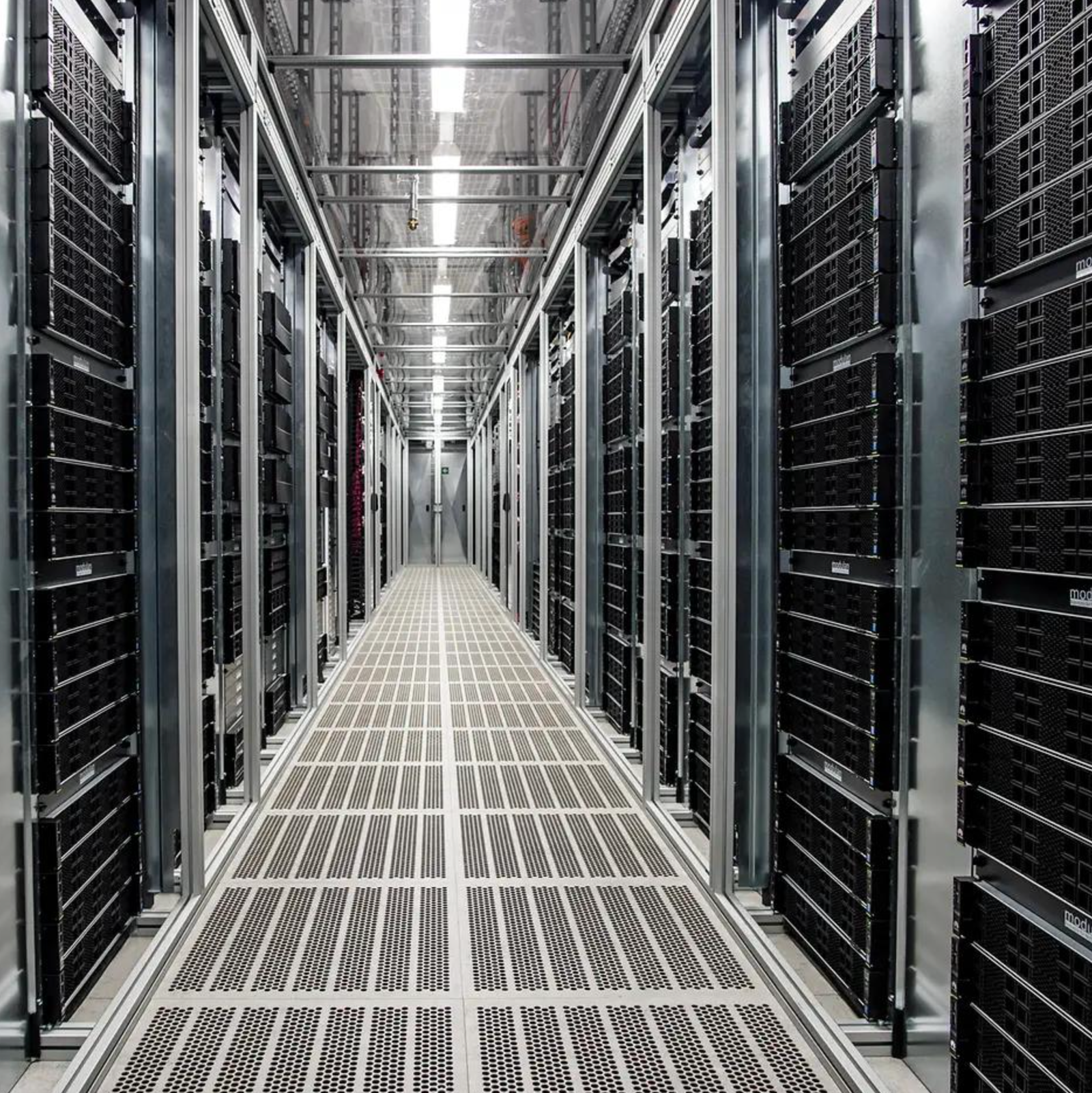
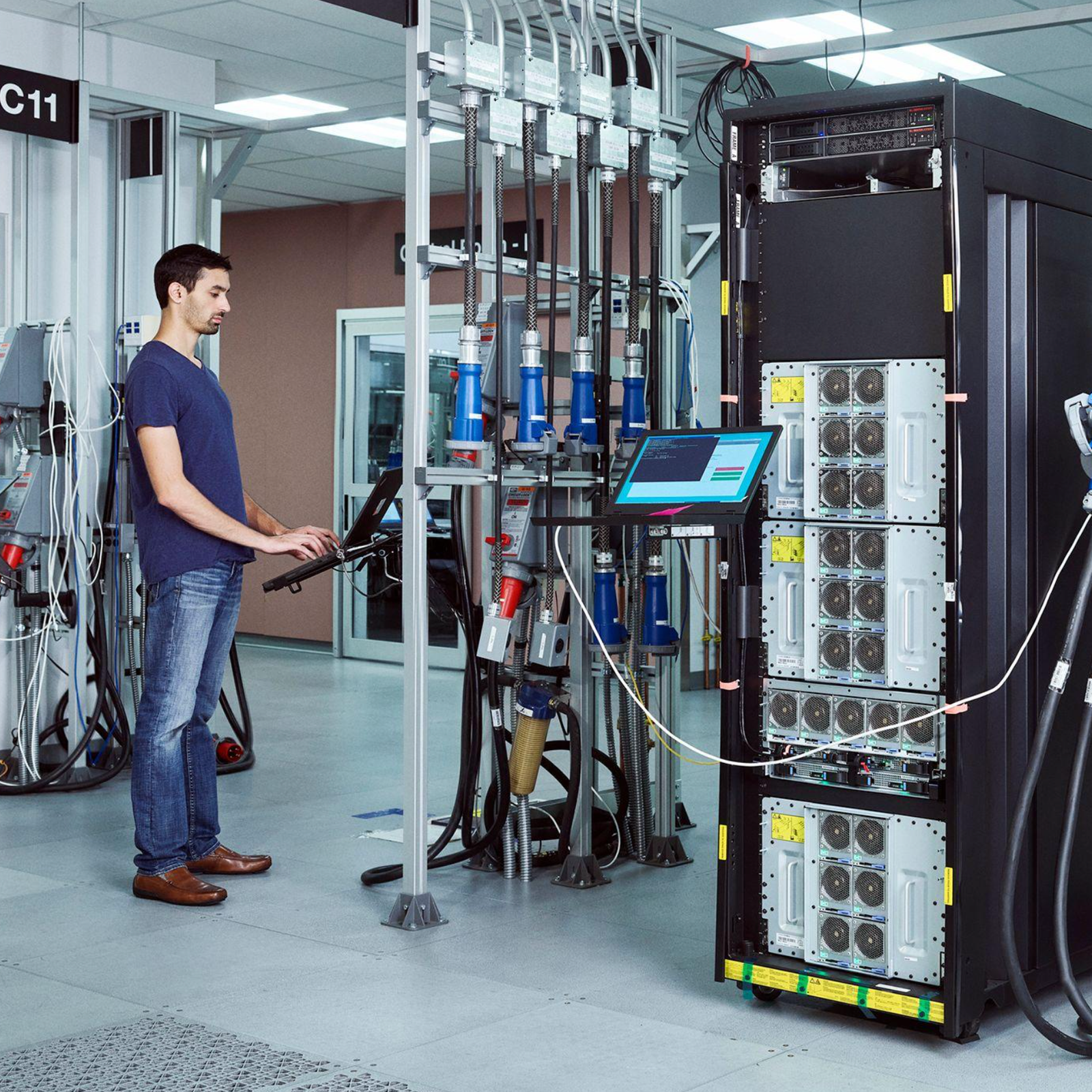
AI infrastructure includes much more than computer chips. It requires specialised processors, servers, high-speed networks, data centres, electricity, cooling systems and the technical expertise needed to operate everything efficiently.
Training advanced models can require substantial computing resources, while deploying AI services to millions of users creates a separate and continuing demand for processing capacity.
For European businesses, access to this infrastructure can influence the cost of developing products, the speed at which researchers can conduct experiments and whether startups can compete with companies that already control large computing platforms.
When local capacity is limited, developers may need to rely on infrastructure operated by foreign providers. That can be a practical solution, but it also raises questions about long-term dependence, costs, data governance and the ability to maintain critical AI services during periods of disruption.
Europe’s infrastructure debate is therefore closely connected to its broader ambition to develop more technological independence.
NVIDIA promotes a faster approach to building data centres
At the Berlin event, NVIDIA promoted its Vera Rubin DSK Pod, a modular system designed to simplify the deployment of AI computing infrastructure.
The approach aims to reduce the time required to install computing capacity by bringing together major elements of the system in a preconfigured format. Rather than treating every project as a conventional data-centre construction exercise, modular infrastructure can allow operators to prepare a suitable site and install equipment more quickly.
However, modular systems do not eliminate the underlying requirements for electricity, cooling, connectivity, planning approval and suitable locations. Large AI facilities can place significant demands on local power networks, and their development can raise environmental and community concerns.
The technology may help accelerate deployment, but its practical success will depend on whether European operators can secure the supporting infrastructure and obtain the necessary approvals.
AI moves from chatbots into European industry
Huang also highlighted the potential for AI to transform industrial operations. NVIDIA has been working with European companies including Siemens, Mercedes-Benz and Audi as businesses explore AI applications in engineering, manufacturing and vehicle technology.
These applications go beyond text generation. Industrial AI can support the design of products, simulation of production processes, analysis of machinery performance and development of systems that interact with the physical environment.
For Europe, this is a particularly important opportunity. The continent has a substantial industrial base, including automotive manufacturing, engineering, aerospace and advanced production equipment. AI could help these sectors improve efficiency and create new products without requiring Europe to dominate every category of general-purpose AI model.
The emerging idea of “physical AI” focuses on systems that understand or interact with real-world environments, including robots, industrial machinery and autonomous technologies.
European manufacturers could benefit from these developments if they can integrate AI into existing operations while maintaining control over safety, quality and sensitive industrial data.
Investment is growing, but questions remain
Huang said NVIDIA had invested $10 billion in European startups and partners over the previous year. The figure was part of the company’s presentation of its growing European engagement and should not be interpreted as a single government-backed infrastructure fund.
The broader investment challenge remains substantial. Data centres require long-term capital commitments, and computing hardware can become outdated as AI workloads evolve. Operators must also consider electricity prices, the availability of grid connections and whether future demand will justify the investment.
Europe must decide how to combine private investment with public policy. Governments can support infrastructure development, but they must also weigh competing priorities such as household energy costs, climate commitments, regional planning and public spending.
There is also a risk that infrastructure investment alone will not produce a competitive AI ecosystem. Europe needs skilled workers, research funding, companies capable of turning AI research into products, and customers willing to adopt those products.
The European AI opportunity
The debate is not simply about matching the United States chip for chip. Europe could build strengths in industrial AI, trustworthy systems, scientific computing and specialised applications that reflect its existing economic capabilities.
But those ambitions require dependable access to computing resources. Without sufficient infrastructure, promising researchers and startups may struggle to scale their work, while established companies could become increasingly dependent on external technology providers.
The Berlin discussions underline a difficult reality for European policymakers: AI sovereignty depends not only on regulation and home-grown models, but also on the physical infrastructure needed to develop and run them.
SEO title: NVIDIA Warns Europe Needs More AI Computing Power to Compete
Meta description: NVIDIA CEO Jensen Huang says Europe must expand its AI computing infrastructure as governments and businesses seek greater technological independence.
Keywords: NVIDIA Europe, European AI infrastructure, AI data centres, Jensen Huang Berlin, AI computing capacity, European AI sovereignty.
Source: Associated Press — NVIDIA urges Europe to accelerate AI infrastructure development












Laat een reactie achter