


September 30, 2026
Europe is investing heavily in artificial intelligence, but a fundamental problem is becoming increasingly difficult to ignore: the continent does not have enough computing infrastructure to compete at the scale of the United States and China.
A recent analysis by Brussels-based economic research institute Bruegel estimates that the European Union has around 2 gigawatts of AI computing capacity in 2026, equivalent to roughly 5% of the global total. The United States is estimated at around 35 gigawatts, while China has approximately 5 gigawatts.
The figures are not a complete inventory of every AI server operating in Europe, and the underlying methodology excludes some existing cloud capacity. But the broad message is difficult to miss: Europe is attempting to build an AI economy while controlling a relatively small share of the computing infrastructure required to run it.
That could become one of the continent’s biggest strategic challenges.
AI needs electricity, chips and enormous amounts of computing power
The modern AI economy is often described in terms of algorithms and models.
Behind those models, however, is an enormous physical infrastructure.
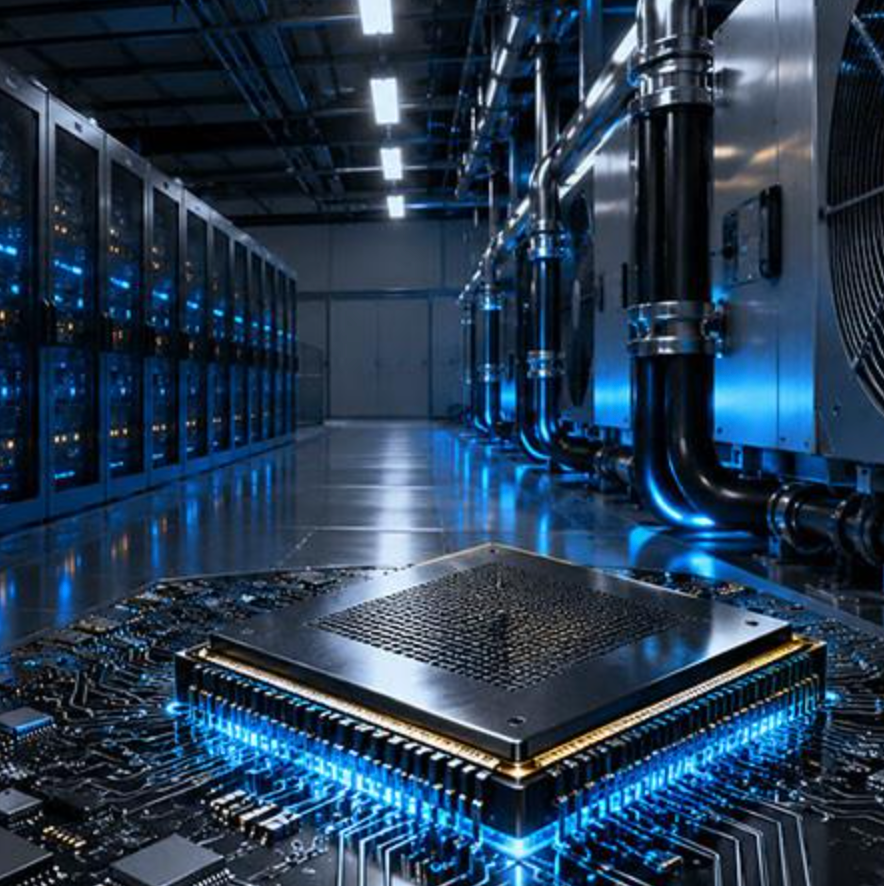
Large AI systems require specialised processors, high-speed networking, cooling systems, data centres and large amounts of electricity.
The same infrastructure is also becoming necessary for inference — the process of actually running AI models for users.
That means Europe cannot solve its AI infrastructure problem simply by training a few European models.
Companies building AI applications still need somewhere to run them.
Hospitals need computing capacity for medical AI.
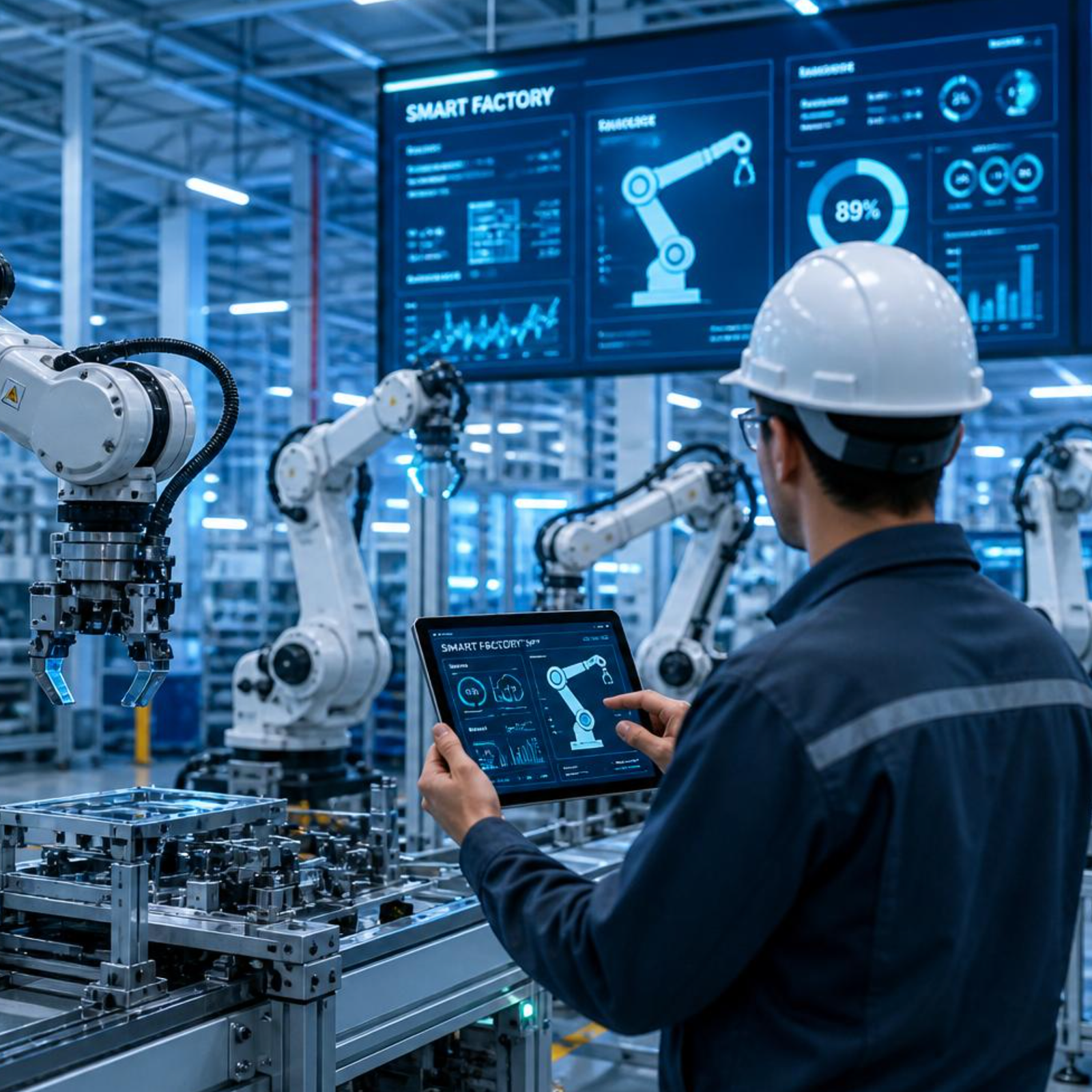
Manufacturers need inference systems for robotics.
Banks need infrastructure for financial models.
Governments need secure computing environments.
And startups need access to affordable compute if they are going to develop competitive products.
The result is that computing capacity increasingly resembles a strategic industrial resource.
Europe is trying to close the gap
The European Commission has been pushing the concept of AI factories and larger AI gigafactories as part of its effort to increase European access to high-performance computing.
But infrastructure development is not simply a question of finding investors.
Power connections, planning approvals, grid capacity and construction timelines can all become bottlenecks.
Bruegel argues that European policy should focus more strongly on accelerating permitting and grid connections rather than relying exclusively on large subsidies for infrastructure construction.
That is an important distinction.
A company can have billions of euros available and still be unable to build an AI data centre quickly if the electricity grid cannot accommodate it or if permits take years.
The numbers could improve — but so could the rest of the world
The European compute deficit also creates a moving-target problem.
Even if Europe dramatically increases its own capacity, the United States and China are also expanding.
Bruegel’s analysis suggests that projects currently planned could increase European AI capacity to almost 21 gigawatts by 2031. But because other regions are expected to expand their infrastructure at the same time, Europe’s share of global capacity would rise only modestly under the scenario examined.
In other words, Europe cannot simply build more.
It has to build faster.
And it needs to determine which parts of the AI infrastructure chain it actually wants to control.
The sovereignty question
The issue goes beyond economics.
Europe relies heavily on foreign technology companies for cloud infrastructure, advanced processors and AI models.
That dependence becomes particularly important when AI is used for sensitive applications.
Healthcare data cannot always be sent to arbitrary external systems.
Defence organisations require highly controlled infrastructure.
Governments increasingly want to know where their data is processed and which legal jurisdiction governs the technology.
European policymakers have therefore increasingly linked AI infrastructure to the broader concept of technological sovereignty.
The objective is not necessarily to replace every American or Asian technology company.
Instead, the strategic question is whether Europe has enough domestic capability to continue operating critical services if access to foreign infrastructure becomes restricted or disrupted.
The chip problem sits underneath the compute problem
Even a massive expansion of European data centres would not solve everything.
The machines inside those data centres matter.
This is where the semiconductor industry becomes critical.
The global AI boom has created enormous demand for advanced accelerators, and a relatively small number of companies control much of the market for the most advanced AI computing hardware.
Europe has world-class semiconductor research and manufacturing capabilities in specific parts of the supply chain, but it has struggled to create globally dominant AI accelerator companies.
That is beginning to change.
Dutch startup Axelera AI, for example, is developing AI accelerators designed specifically for inference workloads, including applications running outside traditional hyperscale cloud environments.
Its latest architecture, called Europa, is intended for enterprise and data-centre workloads and is being integrated into systems from companies including Dell and Supermicro.
Axelera says it now has more than 600 customers globally and a sales pipeline exceeding $1.5 billion, although those are company-reported figures rather than booked revenue.
Europe may need a different AI strategy
The compute gap creates an uncomfortable question.
Should Europe attempt to compete directly with the world’s largest AI infrastructure builders?
Or should it focus on areas where it has structural advantages?
Europe has significant strengths in industrial engineering, automotive manufacturing, robotics, healthcare, pharmaceuticals and scientific research.
These sectors generate enormous amounts of valuable data.
They also contain highly specialised problems where smaller or domain-specific AI systems can potentially be more useful than gigantic general-purpose models.
That could allow Europe to compete through applications rather than raw model scale.
But even those applications require compute.
A European medical AI company cannot escape infrastructure requirements simply because its model is smaller.
Data centres are becoming part of industrial policy
This is why the European debate around AI is increasingly moving away from software alone.
Data centres are becoming strategic infrastructure.
So are electricity grids.
So are semiconductor factories.
So are high-speed networks and advanced cooling systems.
The AI industry is therefore beginning to resemble other industrial sectors where access to physical infrastructure determines who can compete.
Europe’s challenge is that the AI race is moving extremely quickly.
A data centre that takes several years to approve and construct may already be competing against infrastructure that was planned when today’s AI models were still experimental.
The next bottleneck may not be intelligence
The irony is that the next major constraint on AI progress may not be the quality of AI models.
It may be the physical systems required to run them.
Europe can develop excellent researchers, startups and applications.
But without enough computing capacity, electricity and advanced chips, those companies may ultimately depend on infrastructure controlled elsewhere.
That makes Europe’s AI compute shortage more than a technology problem.
It is becoming an industrial-policy question.
And the decisions being made now about grids, data centres, chips and permitting could determine how much of Europe’s future AI economy is actually built in Europe.
Why it matters: Europe does not necessarily need to match the United States and China chip-for-chip or model-for-model. But the continent does need enough computing infrastructure to ensure that European AI companies, researchers and critical services can actually scale.








Laat een reactie achter