


BRUSSELS — Europe is preparing new rules that would force data-centre operators to disclose how efficiently their facilities use electricity and water, as the rapid expansion of artificial intelligence puts growing pressure on the continent’s energy infrastructure.
The European Commission proposed the measures on Monday, September 21, as governments across Europe face a problem that has become increasingly difficult to ignore: the computing infrastructure required to run modern artificial intelligence consumes enormous amounts of electricity, requires sophisticated cooling systems and, in some locations, places additional pressure on scarce water resources.
Under the proposed framework, data-centre operators would have to provide more information about the efficiency of their facilities, allowing governments and the public to better understand the environmental cost associated with the rapidly expanding digital economy.
The announcement comes at a particularly important moment for the AI industry.
The world’s largest technology companies are building increasingly powerful data centres to support generative AI, autonomous agents and advanced computing. These facilities require specialised hardware, large quantities of electricity and cooling systems capable of operating thousands of processors simultaneously.
Europe wants to become a major player in artificial intelligence.
But it is also discovering that becoming an AI power requires something much less glamorous than a powerful model.
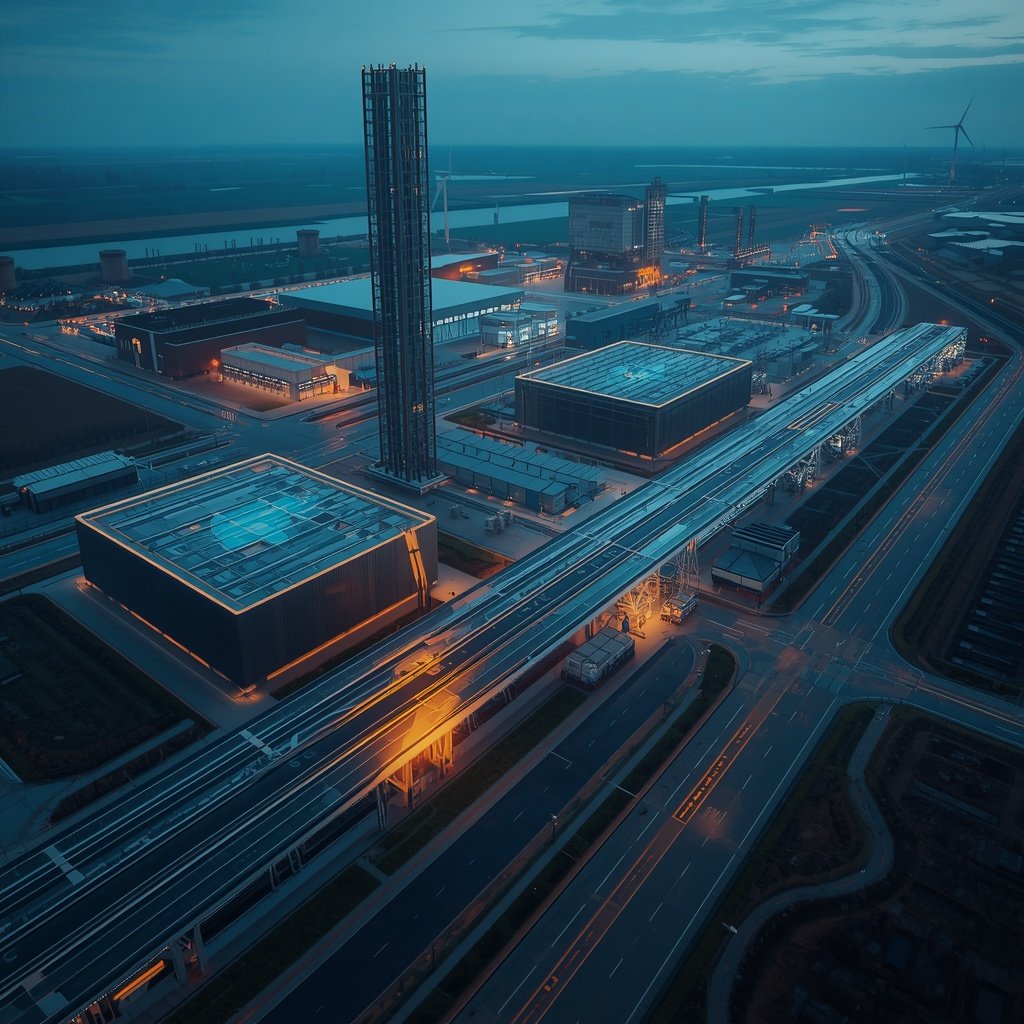
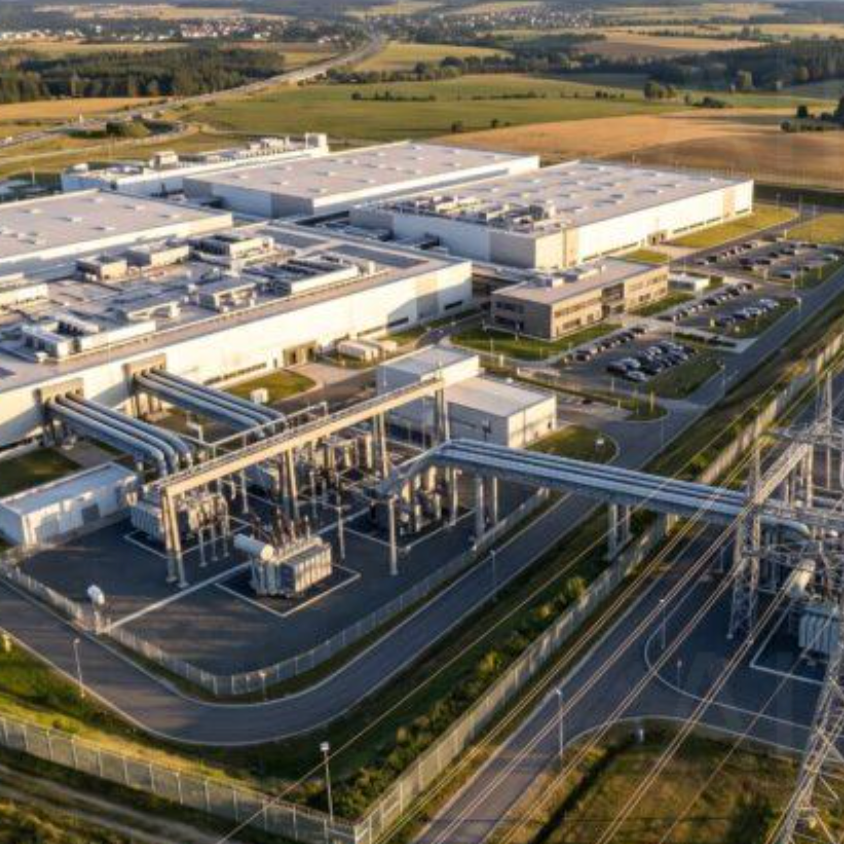
It requires power stations, electricity grids, cooling systems and enormous buildings filled with specialised computers.
AI has turned data centres into strategic infrastructure
For years, data centres were largely treated as an invisible part of the internet.
Consumers interacted with websites, cloud services and applications without needing to think about where the underlying computing took place.
Artificial intelligence is changing that relationship.
Training and operating increasingly sophisticated AI systems requires substantially more computing power than many traditional digital services.
Companies therefore need larger facilities equipped with specialised AI processors.
These processors generate substantial amounts of heat.
The result is a new infrastructure race.
Technology companies are looking for locations where they can obtain sufficient electricity, build large facilities and secure reliable connections to the power grid.
For governments, that creates both an economic opportunity and an infrastructure challenge.
A new AI data centre can attract investment and create demand for construction, engineering and technology services.
But it can also consume as much electricity as a small city, depending on its size and configuration.
That makes the environmental and infrastructure consequences impossible to ignore.
The European Commission wants better information
The Commission’s proposal focuses initially on transparency.
Rather than simply asking whether data centres should exist, European policymakers want more detailed information about how efficiently they operate.
The proposed rules would require facilities to disclose information about their use of energy and water.
That data could then be used to compare facilities, identify inefficient operations and give governments a clearer picture of where computing infrastructure is placing pressure on resources.
The Commission’s move reflects a broader shift in the European approach to data centres.
The facilities were once primarily regarded as private infrastructure operated by technology companies.
They are increasingly being treated as part of critical economic infrastructure.
That is partly because AI has made computing capacity strategically important.
The water problem is easy to overlook
Electricity receives most of the attention when the environmental impact of AI is discussed.
Water is less visible.
But many data centres require cooling systems to remove the heat generated by their servers.
Depending on the cooling technology and local conditions, water can become an important part of that process.
This creates a particularly difficult problem in areas where water resources are already under pressure.
A data centre may have access to sufficient electricity while still creating local concerns about water consumption.
The environmental impact therefore cannot be measured simply by asking how much electricity a facility uses.
Policymakers increasingly need to understand the entire infrastructure footprint.
That includes electricity, water, land, cooling and the source of the energy being consumed.
The AI boom is changing Europe’s electricity debate
The issue is becoming more urgent because AI companies are expanding at extraordinary speed.
Cloud providers are investing billions in new computing facilities.
AI developers are demanding access to increasingly powerful processors.
And governments are encouraging domestic AI infrastructure because they do not want their economies to depend entirely on computing capacity controlled elsewhere.
That creates a difficult equation.
Europe wants more AI infrastructure.
More AI infrastructure requires more electricity.
But Europe is simultaneously attempting to reduce emissions, modernise its electricity grid and increase the share of renewable energy.
Those objectives are not necessarily incompatible.
They do, however, require considerably more planning.
The Netherlands offers a useful example
The Netherlands is already confronting this issue.
Today, the country is also moving forward with its first dedicated AI factory, which will be located in Groningen and operated through infrastructure provided by Eurofiber for SURF, the cooperative representing more than 100 Dutch educational and research institutions.
The project has received substantial public support, including €70 million from the Dutch government and a further €70 million from the European Union. The facility is expected to become operational during 2027 and reach full capacity in early 2028.
What makes the Groningen project particularly relevant to the European debate is its emphasis on energy efficiency and heat reuse.
The facility is designed around direct cooling of AI processors, while residual heat is intended to be supplied to a district heating network.
According to Eurofiber, the system could provide heat for approximately 2,000 homes.
The company also says the design could significantly reduce carbon emissions compared with conventional data-centre operations.
The project illustrates a broader European ambition: AI infrastructure should not simply consume resources. Wherever possible, it should become part of the infrastructure around it.
Europe’s AI ambitions depend on electricity
The underlying issue is larger than environmental reporting.
If Europe wants competitive AI companies, it needs computing capacity.
If it wants computing capacity, it needs electricity.
And if it wants that electricity without undermining its climate and infrastructure objectives, it needs to make major investments in energy generation and distribution.
This is one reason the AI debate increasingly intersects with energy policy.
Artificial intelligence is often discussed as software.
The infrastructure required to operate it is very physical.
It requires factories producing advanced processors.
It requires buildings capable of supporting large numbers of servers.
It requires electricity transmission networks.
It requires cooling.
And it requires maintenance and replacement of hardware.
The software may be digital.
The AI economy is not.
Data-centre operators will face greater scrutiny
The Commission’s proposal could therefore mark the beginning of a broader change in how Europe’s data centres are regulated.
Transparency is the first step.
Once governments have comparable data about energy and water use, they can begin asking more difficult questions.
Should particularly inefficient facilities face additional requirements?
Should new data centres be restricted in regions where electricity capacity is already limited?
Should companies receive incentives for facilities that reuse heat?
Should AI infrastructure be located close to renewable energy production?
And should the environmental footprint of AI services eventually become information available to consumers and businesses?
Those questions become much easier to address when reliable data exists.
Without comparable reporting, governments are forced to rely heavily on estimates supplied by individual companies.
The problem of grid congestion
Electricity availability is becoming one of the biggest constraints on European data-centre development.
In several countries, companies seeking to build large computing facilities are encountering limitations in the electricity grid.
This is particularly relevant for AI infrastructure because modern AI facilities can require much higher power densities than traditional data centres.
The processors are more powerful.
The racks are denser.
The cooling requirements are greater.
And the facilities need extremely reliable electricity.
A conventional office building can survive a brief power interruption with limited consequences.
An AI data centre cannot operate under the same assumptions.
For companies training or serving large models, interruptions can mean significant financial losses.
That makes access to reliable power an increasingly important factor in deciding where AI infrastructure is built.
Europe faces competition from the United States and Asia
The timing of the Commission’s announcement also matters because Europe is competing globally for AI investment.
The United States has attracted enormous amounts of private capital into AI infrastructure.
China is investing heavily in domestic computing capacity and robotics.
European governments want to ensure that the continent does not become merely a consumer of AI services developed elsewhere.
But building European AI infrastructure comes with a different set of political expectations.
European policymakers generally place greater emphasis on privacy, environmental standards and public accountability.
That can make development more complicated.
It can also become an advantage if Europe succeeds in demonstrating that large-scale AI infrastructure can operate with lower environmental costs and greater transparency.
Efficiency could become a competitive advantage
The assumption that environmental regulation necessarily makes AI development more expensive is not always correct.
More efficient cooling systems reduce operating costs.
Better use of electricity reduces waste.
Reusing excess heat creates another potential source of value.
Reducing water consumption can make facilities easier to operate in areas facing water shortages.
In other words, environmental efficiency can become an economic advantage rather than simply a regulatory burden.
The challenge is the initial investment.
Building a highly efficient AI facility can require sophisticated engineering and significant capital.
Companies operating under intense pressure to expand computing capacity may prefer to build quickly rather than optimise every aspect of the facility.
That is where regulation can influence the market.
Transparency could expose differences between AI companies
Another consequence of the new rules could be greater visibility into the infrastructure strategies of major technology companies.
At present, comparisons between AI providers are often dominated by model performance.
Which model is more capable?
Which is faster?
Which is cheaper?
Which performs better on coding or reasoning benchmarks?
The environmental cost of operating those systems is much harder to compare.
More detailed data-centre reporting could eventually make another set of comparisons possible.
How much electricity does it take to operate a particular service?
How efficiently is that electricity converted into useful computing?
How much water is used for cooling?
How much heat is recovered?
Such information could become increasingly relevant to companies purchasing AI services at scale.
The issue goes beyond climate policy
There is also a geopolitical dimension.
Europe wants greater technological sovereignty.
That means building domestic AI models, data infrastructure and computing capacity.
But sovereignty requires physical infrastructure.
If Europe does not build enough data centres, it remains dependent on foreign providers.
If it builds too quickly without considering electricity and water constraints, it risks creating new infrastructure problems.
The Commission is therefore attempting to solve two problems at once.
Europe needs more computing capacity.
It also needs to know what that capacity costs the continent in terms of resources.
The AI industry is entering an infrastructure phase
The most important shift may be that AI is increasingly being treated as an infrastructure industry rather than simply a software industry.
The early AI boom was dominated by models.
Then attention moved toward applications.
Now computing infrastructure is becoming one of the defining constraints.
The companies with access to processors, electricity and data-centre capacity have a major advantage.
That is why governments are becoming involved.
AI infrastructure has become too economically important to be treated entirely as a private-sector issue.
What the new European rules could change
The Commission’s proposal is still a proposal.
The final rules may change during the legislative and implementation process.
But the direction is clear.
European policymakers want significantly more information about the physical resources required to run the continent’s digital infrastructure.
That means AI companies and data-centre operators are likely to face increasing pressure to demonstrate not only that their systems work, but that the infrastructure supporting them is efficient.
For an industry that has spent much of the past few years discussing intelligence, model performance and autonomous agents, that represents a change in emphasis.
The next phase of the AI race will depend partly on something much more basic.
Who has enough electricity, enough computing capacity and enough infrastructure to run the machines?
Europe is betting that it can answer that question without ignoring the environmental cost.
The new data-centre proposal is an early indication that Brussels intends to make that cost visible.
And as artificial intelligence continues to expand, the amount of electricity and water behind every AI-generated answer may become just as important as the model that produced it.








Laat een reactie achter