

7 October 2026
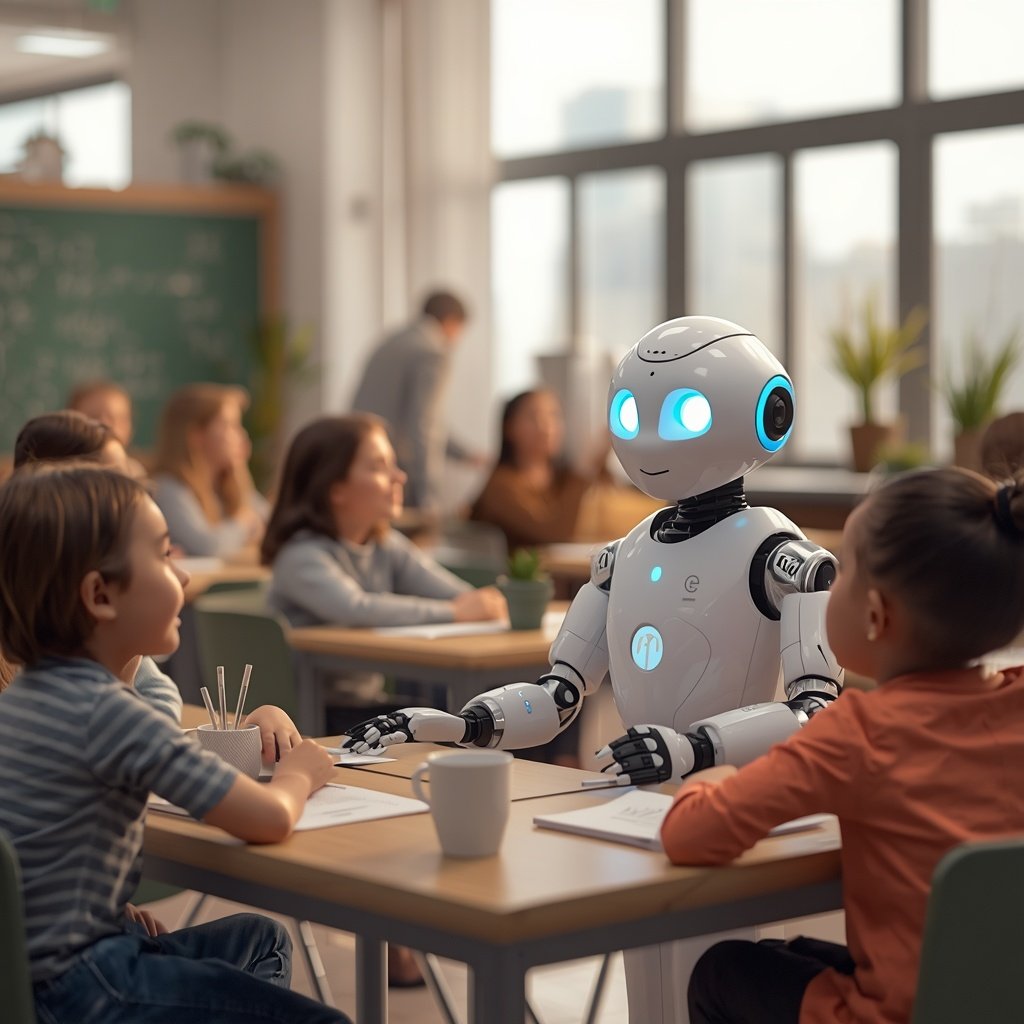
Generative AI is no longer an experimental technology in European education.
It is becoming part of everyday learning.
Two new reports from the European Commission conclude that generative AI is gradually moving into mainstream teaching and learning across Europe, while warning that its long-term effect on students’ skills remains uncertain.
The findings are likely to influence how European schools and governments approach tools such as ChatGPT, Gemini and specialised educational AI assistants.
AI is already being used by students and teachers
The European Commission says generative AI is steadily moving from a technological innovation into a mainstream educational tool.
Students are using AI to ask questions, explain difficult concepts, generate ideas and support assignments.
Teachers are also experimenting with AI to prepare lessons, develop materials and support different learning needs.
But the Commission stresses that simply using AI does not automatically improve learning outcomes.
The biggest question is what students actually learn
One of the most important warnings in the reports concerns over-reliance.
A student may complete an assignment faster with AI.
That does not necessarily mean the student has learned more.
If an AI system writes an essay, solves a problem or produces an explanation without requiring the student to understand the process, some of the educational value can disappear.
The European Commission therefore says the long-term effects of generative AI on skills remain unclear.
Teachers need AI training
The Commission argues that teachers need substantial initial and ongoing professional development if schools are going to use generative AI effectively.
That is a major issue for Europe.
Giving teachers access to AI is relatively easy.
Teaching them when to use it — and when not to use it — is considerably more difficult.
Teachers also need to understand problems such as hallucinations, bias, privacy and inappropriate AI-generated content.
Nearly two-thirds of European education systems already have AI policies
The research also shows that governments are beginning to respond.
Nearly two-thirds of the European education systems examined have developed strategies, guidance or policy frameworks dealing with AI.
However, implementation differs considerably between countries and even between schools.
Digital infrastructure is another problem.
While most European education systems address basic digital infrastructure, differences remain in access, technical support and the digital environments available to schools.
Europe is trying to avoid an AI education free-for-all
The reports suggest that Europe is moving toward a more structured approach.
Rather than simply banning AI, governments are increasingly trying to define how it can be used responsibly.
That could mean allowing AI for brainstorming, tutoring or personalised learning while placing stronger restrictions on automated assessment or tasks where students are expected to demonstrate their own skills.
The classroom of the future will probably include AI
The Commission’s findings point toward a future where AI becomes a normal part of education.
But the technology will not automatically make schools better.
The crucial factor will be how teachers and students use it.
Europe’s challenge is therefore not simply to give every student access to AI.
It is to make sure that AI strengthens learning rather than replacing it.
Source: European Commission – AI and digital technologies in teaching and learning









Laat een reactie achter