


October 8, 2026
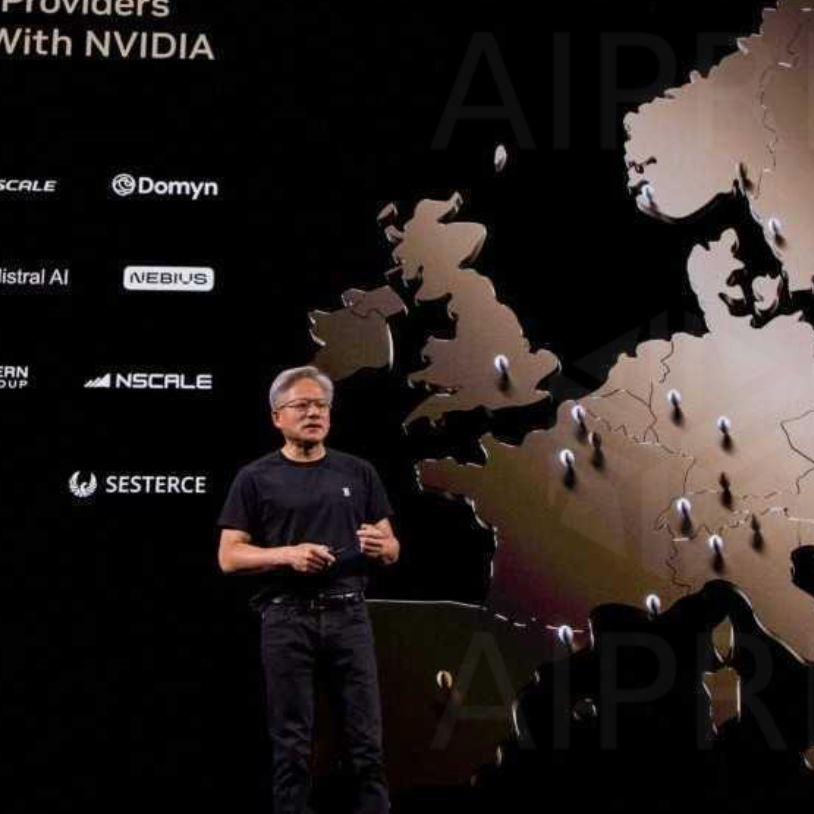
Europe’s artificial intelligence industry is showing signs of becoming a much more serious competitor to the United States and China.
New data released this week indicates that European venture funding had its strongest quarter in four years during the third quarter of 2026, with AI companies playing a major role in the increase.
At the same time, European AI developers including France’s Mistral and Germany’s Aleph Alpha are releasing increasingly ambitious models as governments push for greater technological sovereignty.
The result is a European AI market that looks considerably different from the one that existed only a few years ago.
Europe wants its own AI stack
For much of the generative AI boom, the biggest names came from the United States.
OpenAI, Google, Microsoft, Meta and Anthropic dominated the conversation.
Europe had excellent AI researchers and startups, but relatively few companies capable of competing at the frontier of foundation models.
That is changing.
France’s Mistral has become one of Europe’s best-known AI companies, while Germany’s Aleph Alpha is pursuing its own strategy around sovereign and enterprise AI.
Recent European model releases are increasingly being presented not merely as local alternatives, but as serious competitors in the global AI market.
Why sovereignty matters
The European debate is not only about creating a European version of ChatGPT.
Governments and companies increasingly worry about becoming completely dependent on foreign AI providers.
If an organisation’s customer service, software development, government systems or internal documents all depend on an American or Chinese AI provider, switching later could become extremely difficult.
That creates a strategic argument for European alternatives.
European governments therefore increasingly want access to AI infrastructure, models and computing capacity that can be controlled within Europe.
The Netherlands is part of the story
The Netherlands is also trying to strengthen its position.
Dutch AI companies and research institutions are becoming increasingly involved in European AI development, while the government is investing in strategic AI infrastructure and international partnerships.
A new Dutch AI model called Metis, developed by GreenPT, is also being positioned as a European alternative for automated decision-making. The company describes it as a fully European AI model designed for decision-support applications.
That development is important because Europe is trying to build an ecosystem rather than relying exclusively on one or two large American providers.
Funding is moving beyond London
Another interesting development is where European AI investment is going.
Crunchbase data shows that Europe’s third quarter was its strongest venture-funding quarter in four years, with AI companies contributing significantly to the increase. The growth is also spreading beyond the traditional European technology centres.
London remains one of Europe’s biggest startup hubs, but Germany, France and other European markets are becoming increasingly important.
That geographic diversification could become an advantage.
Europe has a large industrial base and major companies in sectors such as automotive, manufacturing, healthcare, finance and energy.
Those industries generate enormous amounts of demand for specialised AI.
Europe does not necessarily need to beat OpenAI
One of the biggest misconceptions about European AI is that European companies have to create a model that is universally better than ChatGPT.
They do not necessarily need to.
A European model can be valuable even if it is not number one in every benchmark.
For a bank, government department or healthcare organisation, other factors can matter more:
Where is the data processed?
Who controls the infrastructure?
Which laws apply?
Can the system be audited?
Does it support European languages?
Can the model be deployed privately?
Those questions create opportunities for European AI companies.
Regulation could become a competitive advantage
Europe’s AI Act is often described as a burden for technology companies.
But regulation can also create demand for European AI providers that build compliance into their products from the beginning.
The EU’s framework already includes rules covering general-purpose AI models, transparency and systemic risks, while enforcement powers for several provisions became applicable in August 2026.
That means European companies are operating in a market where trust, transparency and documentation can become commercial advantages.
The real test comes next
Europe has made progress, but the hardest part is still ahead.
Building a model is one thing.
Building a global AI company is something else entirely.
European companies need computing capacity, talent, customers, distribution and enough capital to compete with companies spending billions of dollars on AI infrastructure.
The recent funding numbers suggest investors are increasingly willing to finance that ambition.
The emergence of stronger European models suggests the technology is developing as well.
Europe may therefore not become the home of the world’s single largest AI company.
But it could become something equally important: a major independent AI ecosystem that does not have to choose between Silicon Valley and China.
Sources:
Crunchbase – Europe’s Q3 venture funding and AI growth
European Business Magazine – European AI models
EU AI Act enforcement framework









Laat een reactie achter