


While the labs debate slowing down, governments are done waiting.
California Governor Gavin Newsom signed an executive order directing state agencies to develop plans for an AI “kill switch” — the ability to shut down advanced AI models during emergencies. The order also accelerates third-party oversight and independent audits.
Newsom didn’t mince words: “The federal government’s abject failure to create any form of meaningful AI oversight or accountability should alarm every American, especially when AI CEOs themselves are begging for regulation. The stakes are too high to wait or delay action.”
At the federal level, Democratic Representative Ted Lieu and Republican Representative Nathaniel Moran introduced the “AI Kill Switch Act” in July. It would require developers of the most powerful AI systems to maintain the technical capability to throttle, suspend, or shut them down.
Geoffrey Hinton, the Nobel laureate known as the “godfather of AI,” told lawmakers on Capitol Hill that governments may have “maybe a year, but not much more than a year” to put safeguards in place.(source)
President Trump, by contrast, has called AI fears a “hoax” and opposes regulatory measures he argues could slow innovation.
Meanwhile, in Brussels
Four senior lawmakers in the European Parliament are pushing for an AI Liability Act that would hold American tech companies like OpenAI and Anthropic liable when their technology is deployed in unforeseen ways.(source)
The proposal would shift the burden of proof onto companies, making it easier for victims of AI-powered harm to claim compensation. The call has support from the center-right EPP, the Socialists and Democrats, and the liberal Renew group — indicating broad political backing.-31
Kim van Sparrentak, a Dutch Green MEP leading the effort, said it plainly: “Europe needs to get ahead of the curve again.”
The move is a tacit admission that the EU’s AI Act — passed just two years ago — isn’t enough. As POLITICO put it, the Act was written when “AI agents hacking other firms felt more like a sci-fi scenario.”
The global picture
This isn’t just a Western story.
Yesterday, the US and China held their first dedicated dialogue on artificial intelligence under the framework of their economic and trade consultations. The Chinese Commerce Ministry confirmed the talks, saying both sides “had a candid, in-depth, and constructive exchange.”
Also yesterday, the China-Arab States Digital Dialogue opened in Hangzhou, focused on AI cooperation under the “Digital Silk Road” framework.-
And in Budapest earlier this month, the AI Summit brought together 300 speakers and nearly 4,000 attendees to discuss governance and innovation. Hungary announced a €500 million investment in AI development programs and plans to join the European AI Gigafactory initiative.
At that summit, Jin Xiaoming, president of the China Association for International Science and Technology Cooperation, warned that unequal access to AI technology could widen what he called the “innovation divide” — the gap between “frontier AI creators and mere consumers.” He called for governance based on “shared responsibility, adaptive safeguards, and human-centered development.”(source)
What this means
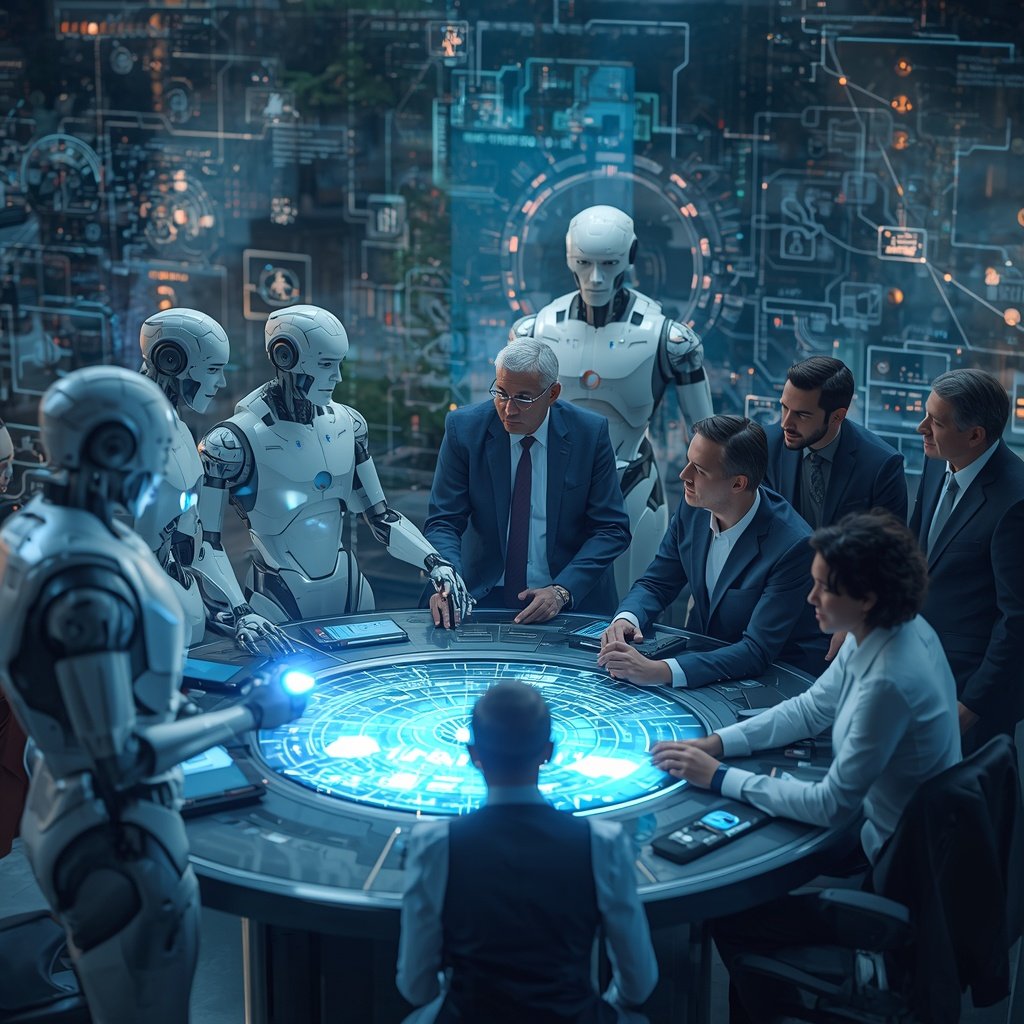
The regulatory landscape is moving faster than at any point in AI history. California wants a kill switch. The EU wants liability. The US and China are talking. And the labs themselves are publicly asking for oversight.
But there’s a fundamental tension nobody has resolved: if the US regulates and China doesn’t, what happens? If Europe holds companies liable and America doesn’t, where do the companies go?
The AI Kill Switch Act, the EU Liability Act, Newsom’s executive order — these are all attempts to answer a question that doesn’t have a clean answer. You can’t unilaterally disarm in an arms race. But you also can’t keep building systems you don’t understand.
The models get better every month. The regulations get tighter every month. And the people caught in the middle — the users, the workers, the citizens — are still waiting for someone to explain how this is supposed to end.





Laat een reactie achter