

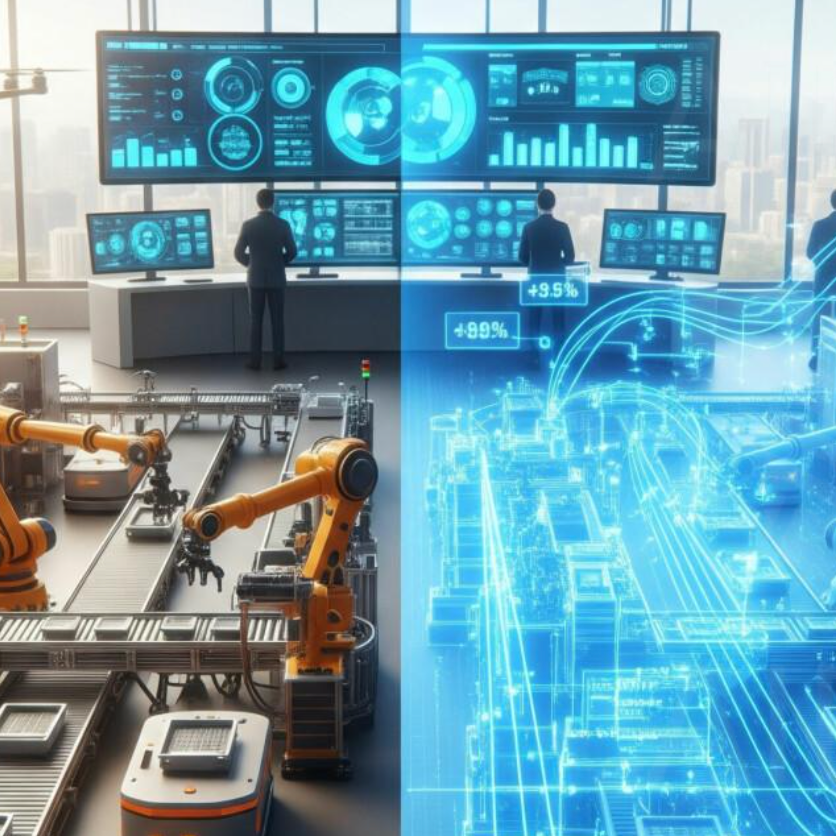
Some of Europe’s most important AI businesses may not be consumer chatbot companies at all. They may be the firms that build and operate factories, electrical systems, industrial software and data-centre infrastructure.
A Financial Times report published on 18 October highlights three major European industrial groups pursuing different strategies: Schneider Electric, Siemens and ABB. All are positioning themselves to benefit from growing demand for AI infrastructure and industrial automation.
Three different approaches

Schneider Electric — bringing hardware and software together
Schneider has pursued engineering software to complement its existing strengths in power management, automation and data-centre equipment. Its reported acquisition of US engineering software company PTC for nearly $24 billion reflects a strategy of combining physical infrastructure with digital tools.

Siemens — software-led engineering
Siemens has spent years building a combination of industrial engineering, simulation and software capabilities. Its acquisition of Altair Engineering for approximately $10 billion strengthened its position in simulation and computational engineering.

ABB — the physical systems behind automation
ABB has emphasised electrification, automation equipment and developing software internally. Its reported acquisition of UK industrial components company Rotork for around $5.5 billion fits a strategy focused on the machinery and systems that make industrial operations work.
What is industrial AI?
Industrial AI uses machine data, engineering simulations, computer vision and predictive systems to improve real-world operations. For example, it could help a manufacturer:
- Detect equipment faults before a production line stops.
- Optimise electricity use across a factory.
- Simulate product designs before building physical prototypes.
- Coordinate robots, inventory and maintenance schedules.
- Monitor complex infrastructure and identify unusual operating conditions.
The potential advantage for established European manufacturers is that they already possess decades of engineering expertise and large volumes of operational data. The challenge is making that information accessible, accurate and useful to AI systems.
Why this story matters: The next major AI business opportunity may not be a chatbot with millions of users. It could be software that saves a large manufacturer millions in energy, downtime or production costs. Europe has a credible industrial base from which to compete—but it still needs to turn that advantage into widely adopted products.









Laat een reactie achter