

September 29, 2026
Artificial intelligence is moving into one of the most ordinary transactions imaginable.
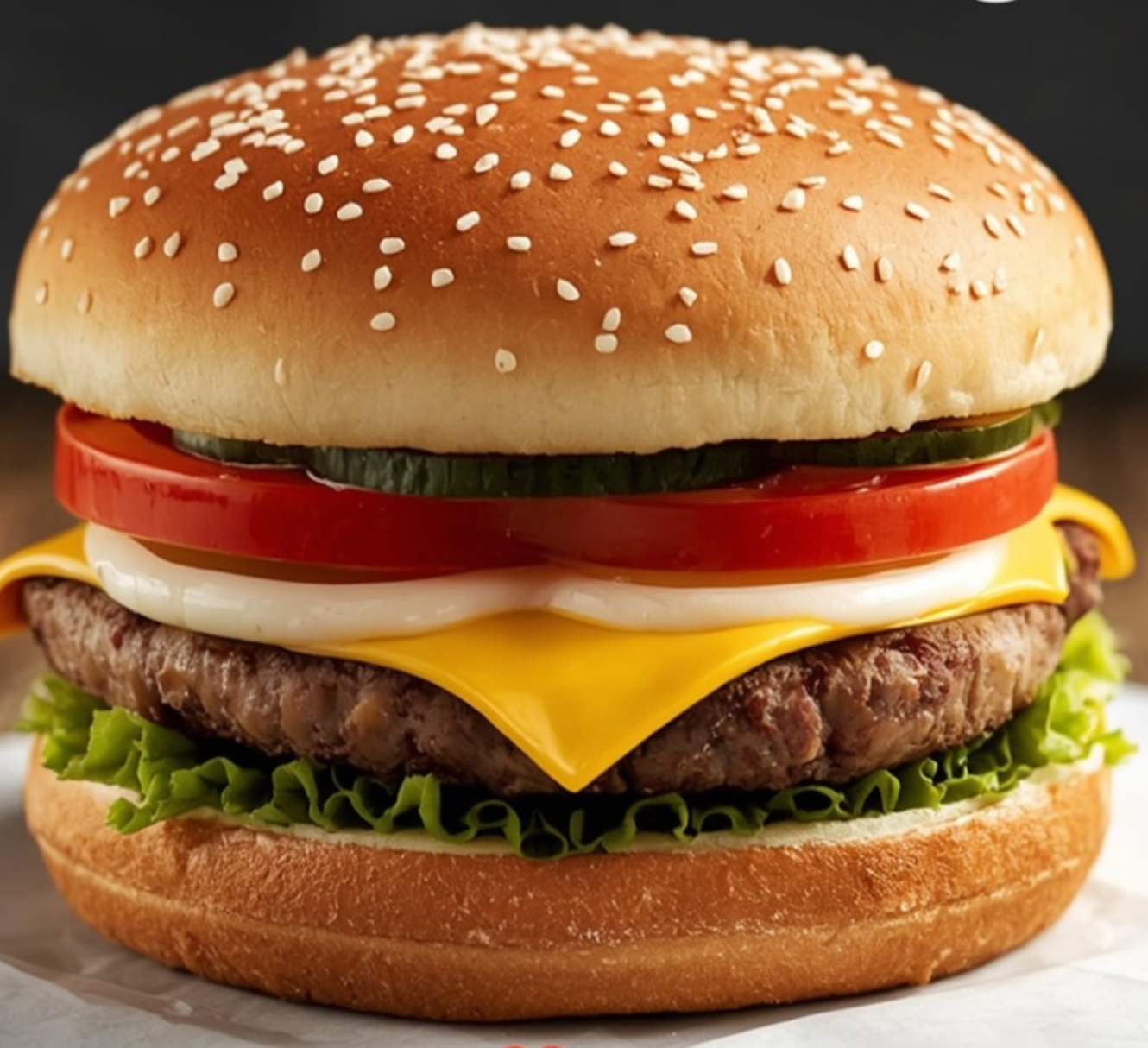
Buying a burger.
McDonald’s is increasingly using AI to help guide menu prices across the United States and some international markets, with systems designed to estimate how much customers at individual locations may be willing to pay for particular items.
That sounds like a relatively small application of AI.
It isn’t.
Because behind the Big Mac is a much larger transformation in how companies think about pricing.
For decades, restaurants generally relied on relatively simple pricing structures.
A burger had a price.
A meal had a price.
Prices might vary between cities or locations, but customers generally knew what they were going to pay before ordering.
AI makes it possible to build something much more dynamic.
A system can potentially analyse location, demand, historical sales, customer behaviour and other signals and use them to recommend prices.
The technology can turn pricing from a periodic business decision into a continuously optimised system.
And that raises an uncomfortable question:
If an AI knows exactly how much a particular customer base is willing to pay, should it use that information to charge more?
McDonald’s is turning pricing into a data problem
The basic concept is not new.
Businesses have used dynamic pricing for years.
Airlines change ticket prices.
Hotels change room rates.
Ride-hailing companies adjust prices according to demand.
Online retailers constantly experiment with pricing.
But restaurants have historically been more constrained.
The price displayed on the menu is part of the customer experience.
McDonald’s operates an enormous network of restaurants, however, and that produces an enormous amount of data.
Every location generates information about what customers buy.
When they buy it.
How much they spend.
Which products are popular.
Which promotions work.
And which prices appear to change purchasing behaviour.
AI can process that information at a scale that would be difficult for humans to manage manually.
The result is a system capable of asking a very different question:
What is the optimal price for this product at this location right now?
The important word is “willing”
According to Reuters, one factor being considered by the AI system is an estimate of how much customers at a particular restaurant are willing to pay.
That is where the technology becomes particularly interesting.
Traditional pricing asks:
What does this product cost us, and what price will maximise sales?
AI-assisted pricing can ask:
What is the maximum price this particular market appears willing to tolerate?
Those questions sound similar.
Economically, they can produce very different outcomes.
A restaurant in a high-income area with strong demand could potentially receive a different recommendation from a restaurant in a price-sensitive market.
That could allow McDonald’s to maximise revenue much more precisely.
But it also risks creating the perception that customers are being charged according to how much the system thinks they can afford.
The franchise problem
McDonald’s is not a single company operating every restaurant itself.
A huge portion of its global restaurant network consists of franchises.
That makes pricing more complicated.
Franchisees have their own economics.
They face different labour costs.
Different rents.
Different local competition.
Different customer demographics.
Different demand patterns.
An AI pricing system could potentially help standardise decisions across that enormous network.
But it can also create tension if franchisees believe the recommendations do not match their local market.
The technology therefore isn’t simply a machine-learning problem.
It becomes an organisational problem.
Who decides the price?
The franchisee?
Corporate headquarters?
The AI?
And if the AI makes a recommendation that hurts sales, who is responsible?
Customers may not like the answer
The biggest challenge could be psychological.
People understand that airline tickets fluctuate.
They are less accustomed to seeing the price of a hamburger behave like a financial asset.
Imagine two customers ordering the same meal at two different McDonald’s restaurants and discovering significantly different prices.
That already happens for many reasons.
But if consumers believe the difference is caused by AI estimating their willingness to pay, the reaction could be very different.
Customers may start asking:
Is the price based on the cost of the food — or on what the company thinks I will tolerate?
That distinction matters.
Trust is an increasingly important issue in AI deployment.
Companies can technically implement sophisticated systems long before customers are psychologically comfortable with them.
AI can make pricing more efficient — but also more opaque
There is a legitimate business case for the technology.
Restaurants operate on relatively thin margins.
Demand changes throughout the day.
Food costs fluctuate.
Labour costs differ by location.
Waste is expensive.
A system that predicts demand more accurately could help restaurants order the right amount of inventory, reduce waste and optimise staffing.
Pricing could become one component of a much broader AI management system.
The same technology could potentially determine when promotions should run, which products should be highlighted and how much inventory should be prepared.
In that scenario, AI isn’t simply deciding the price of a burger.
It is helping manage the entire restaurant.
But the more decisions become automated, the more difficult it becomes for customers to understand why they are seeing a particular offer or price.
This is where regulators start paying attention
Reuters reports that McDonald’s AI pricing strategy risks attracting antitrust scrutiny.
The reason is obvious.
If many businesses use similar algorithms to determine what consumers are willing to pay, regulators may eventually ask whether algorithmic pricing could create new forms of coordination or reduce meaningful competition.
That does not mean McDonald’s is doing anything illegal.
It means AI creates new questions for competition authorities.
Traditional antitrust law was built around humans communicating with humans.
Algorithmic markets can operate differently.
If thousands of companies independently use optimisation systems trained on similar market data, prices could potentially behave in ways that regulators did not anticipate.
The technology therefore creates a new frontier for competition policy.
The supermarket is next
McDonald’s is particularly interesting because the company represents something much larger than fast food.
AI pricing can potentially be applied anywhere companies sell standardised products.
Supermarkets.
Hotels.
Streaming services.
Parking.
Travel.
Entertainment.
E-commerce.
Even electricity.
Once companies have enough data about customer behaviour, AI can theoretically estimate demand and adjust prices continuously.
That could create a world where the price displayed to consumers is increasingly dynamic.
Instead of asking:
How much does this cost?
Consumers may increasingly have to ask:
Why am I being shown this price?
The invisible AI economy
This is perhaps the most important aspect of McDonald’s experiment.
The most consequential AI applications may not look futuristic at all.
There is no humanoid robot.
No giant language model interface.
No science-fiction laboratory.
There is simply a number on a menu.
But behind that number could be a complex AI system analysing millions of historical transactions and estimating how customers respond to price changes.
That is what the next phase of enterprise AI may look like.
AI disappearing into ordinary business processes.
Customers may never know when an algorithm is making a decision.
They will simply experience the result.
The question is no longer whether AI can optimise prices
It clearly can.
The more interesting question is how much optimisation consumers are comfortable with.
A company wants to maximise revenue.
A customer wants a fair price.
Those objectives are not always identical.
AI makes it easier for companies to identify the exact point where those objectives collide.
And that could become one of the defining economic questions of the AI era.
The Big Mac may therefore be a surprisingly good symbol of the next phase of artificial intelligence.
AI is no longer just writing text or generating images.
It is beginning to decide how much things cost.
And once algorithms start setting prices for everyday goods, the relationship between consumers, companies and artificial intelligence becomes much more personal.





Laat een reactie achter