


Europe has spent years talking about becoming an AI superpower.
Now it’s starting with something much less glamorous:
chips.
The Netherlands and Germany are joining forces on a new AI-chip design programme worth around €40 million, according to reporting published today.
And this matters a lot more than it sounds.
Because underneath every impressive AI chatbot is something incredibly boring:
silicon.
Lots and lots of silicon.
The AI race is secretly a chip race
Everyone talks about AI models.
ChatGPT.
Claude.
Gemini.
AI agents.
Robots.
But none of them work without enormous amounts of computing power.
And that means chips.
The problem for Europe is that the global AI-chip supply chain is dominated by companies and countries outside Europe.
So Europe has a slightly awkward situation:
It wants to become an AI powerhouse while depending heavily on other parts of the world for the hardware.
That’s not exactly ideal.
Enter the Dutch-German alliance
The new programme aims to strengthen AI-chip design capabilities in both countries.
For the Netherlands, this is particularly interesting because the country already has an unusually important position in the global semiconductor industry.
And Germany brings enormous industrial and manufacturing capabilities.
Put the two together and Europe is essentially saying:
“Maybe we should build some of the brains ourselves.”
Why €40 million matters
€40 million sounds enormous until you compare it with the billions being spent globally on AI infrastructure.
So this isn’t going to suddenly create a European competitor to every giant chip company on Earth.
But that’s not necessarily the point.
The goal is to strengthen expertise, develop new designs and create a stronger European ecosystem.
Because if AI continues growing at its current speed, having people who understand how to design the underlying hardware could become extremely valuable.
The funny thing about AI
We spend hours arguing about which AI model is smartest.
Meanwhile, the real battle is happening underneath the surface.
Tiny pieces of silicon are doing the actual work.
So while everyone is asking:
“Which AI should I use?”
Europe is asking a slightly different question:
“Who built the thing running the AI?”
And that question could become extremely important over the next few years.
Europe doesn’t just want to use AI.
It increasingly wants to own more of the technology underneath it.
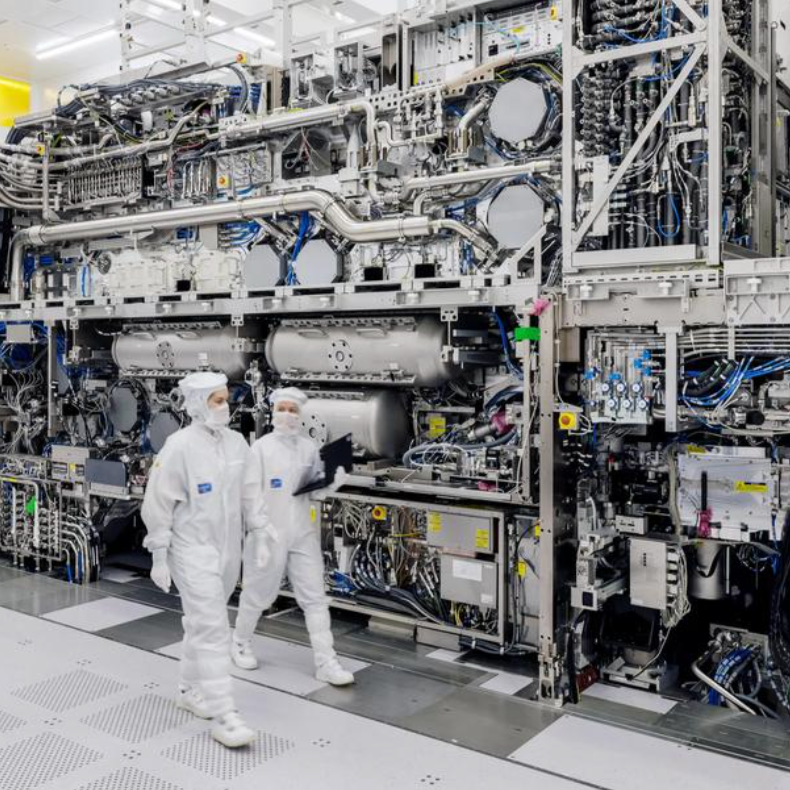
And apparently the first step is buying a very expensive box of extremely clever silicon.









Laat een reactie achter