

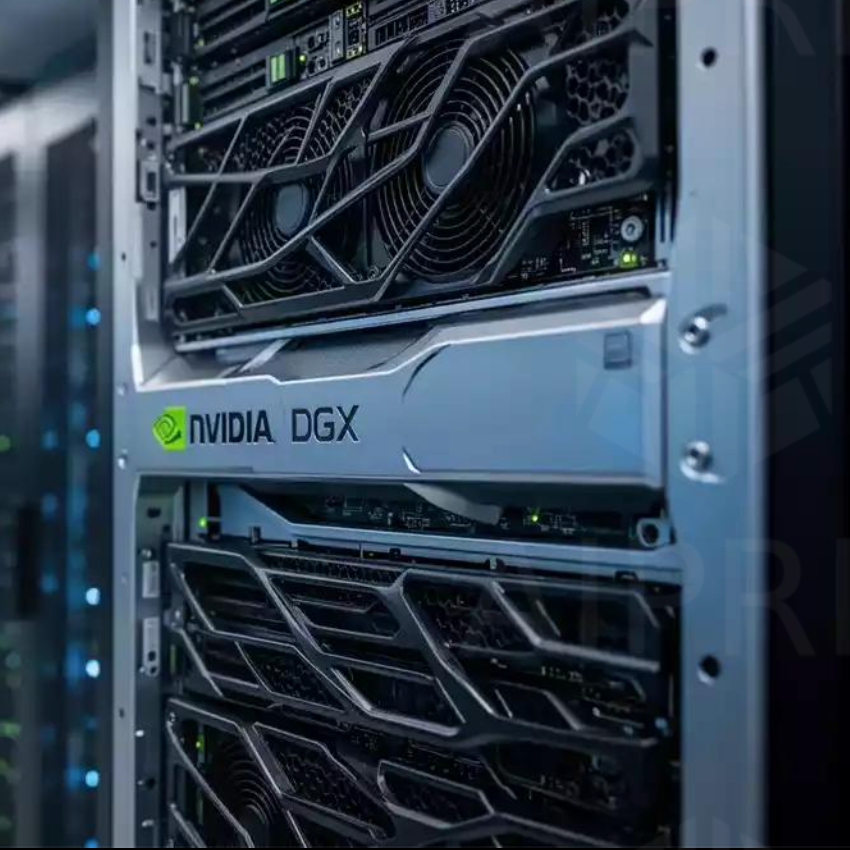
Nvidia has secured a new customer for its Vera central processor: Modal, a cloud-computing company that provides infrastructure to AI developers. Ai Nieuws reported the agreement on 19 October.
This is strategically important because Nvidia is best known for its graphics processing units, or GPUs, which have become essential for training and running advanced AI models. CPUs—the central processors that manage general computing tasks—have traditionally been dominated by Intel and AMD.
Why does an AI agent need different computing resources?
A chatbot might receive a prompt, generate an answer and stop. An AI agent may work for much longer, repeatedly calling models, executing code, retrieving information and coordinating tools.
Those tasks do not all require the same kind of processor. GPUs are highly effective at many parallel AI calculations, while CPUs handle a broad range of general-purpose operations and orchestration.
Nvidia is betting that the growing use of agents creates an opportunity to supply more of the computing infrastructure around the model, rather than only the accelerators that run it.
What did Modal report?
Modal said early tests showed Nvidia’s Vera processor completing twice as much agent work as the Intel and AMD chips used in its comparison. The company plans to use Vera alongside its existing processors rather than abandoning those suppliers. The benchmark is an early company-reported result, not an independent finding that Vera is twice as fast for every workload.
Modal also reported strong business growth, saying it was on track for $1 billion in sales over the following year after raising $750 million at a $15.75 billion valuation.
Why this matters
If AI agents become a major category of software, the economics of computing could change. Customers may care less about the speed of one model response and more about how much useful work an entire system can complete for a given cost.
That creates opportunities for chipmakers, cloud providers and software companies that optimise the whole workflow.
For Europe, the lesson is that the AI infrastructure race is expanding beyond GPUs. CPU design, networking, memory, cooling and energy efficiency will all influence how affordable advanced AI becomes.
What to watch: whether independent benchmarks confirm meaningful advantages for agent workloads, and whether Nvidia can establish a substantial CPU business alongside its dominant position in AI accelerators.












Laat een reactie achter