

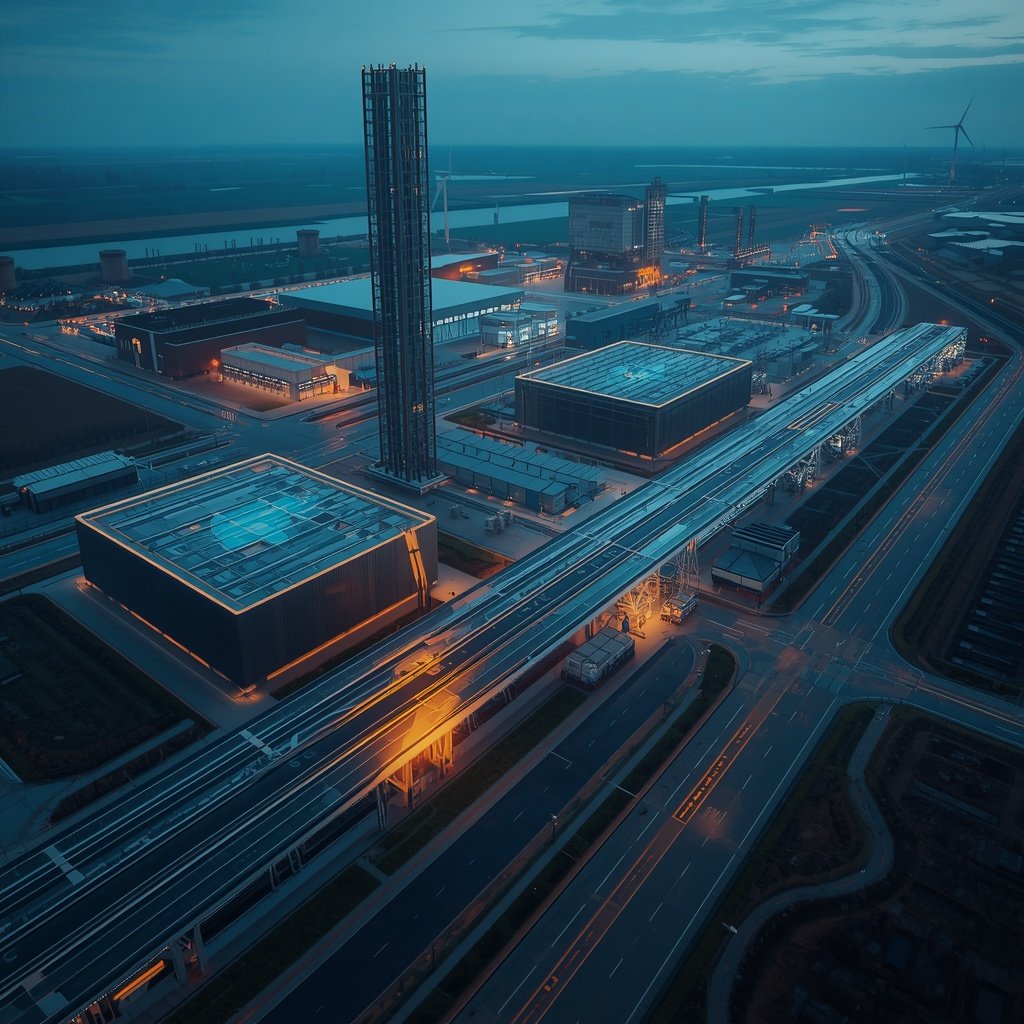
Europe’s AI ambitions depend on something that often receives less attention than new chatbots and powerful language models: physical infrastructure.
Every AI query requires computing resources. Training advanced models can require enormous processing capacity, while popular AI services must operate continuously to respond to users. Behind those digital interactions are data centres containing thousands of processors, cooling systems and supporting equipment.
As AI adoption grows, these facilities are becoming increasingly important to the technology economy. They are also attracting greater scrutiny over electricity consumption, water use and the demands they place on local infrastructure.
In September 2026, the European Commission proposed rules requiring data centres in Europe to disclose information about their energy and water efficiency. The proposal reflects growing concern about the resources needed to support digital services and the importance of making their environmental performance more transparent. Reuters
Why AI is increasing infrastructure demand
AI workloads can be computationally intensive, particularly when large models are trained or when services handle substantial volumes of requests.
The demand is not limited to building new models. Once an AI system becomes popular, operating it at scale can require substantial ongoing computing capacity. AI agents may increase that demand further if they perform multiple searches, call external tools or run repeated reasoning steps to complete a task.
This creates an infrastructure challenge for cloud providers and the companies building AI products. They must decide where to locate computing facilities, how to secure reliable electricity and how to cool the equipment efficiently.
The requirements vary considerably by facility and workload. Not every data centre has the same energy profile, and not every AI task requires the same level of processing power. Nevertheless, the growth of AI has increased attention on the resources required to expand digital infrastructure.
Why Europe is focusing on transparency
The European Commission’s September proposal would require data centres to disclose information related to energy and water efficiency. Better reporting could help policymakers understand how infrastructure is performing and compare facilities using more consistent information. Reuters
Transparency matters because data-centre expansion can affect communities in different ways.
A new facility may bring investment, construction work, technical jobs and additional demand for local services. At the same time, it can increase pressure on electricity networks and, depending on the cooling system and local conditions, water resources.
Public debate can become particularly intense when residents believe that new infrastructure will compete with households or local businesses for limited resources.
Reliable data can help distinguish between facilities that use resources efficiently and those that may need improvements. It can also help governments plan infrastructure investments and assess whether proposed developments fit local conditions.
However, reporting alone does not guarantee lower consumption. Its effectiveness will depend on the quality of the information, the standards used to evaluate it and the measures adopted in response.
Can data centres become more sustainable?
There are several ways operators can seek to improve efficiency.
One approach is to use more efficient processors and optimise software so that AI workloads require less computing power. Another is to improve cooling systems, manage heat more effectively and select locations suited to the facility’s operating requirements.
Energy procurement is also important. Some companies are investing in renewable electricity or entering long-term energy agreements. Others are exploring nuclear power and other sources that can provide dependable electricity with lower operational carbon emissions.
Google’s announced investment in Finland illustrates how AI infrastructure plans can be connected to energy strategy. The company announced plans in September to invest at least €13 billion in AI infrastructure in the country, including plans involving nuclear power. Reuters
Yet there is no single solution that works everywhere. Water availability, electricity prices, grid capacity, climate and the local energy mix all influence the environmental impact of a data centre.
A facility powered by relatively low-carbon electricity may have a different emissions profile from one operating in a region with a more carbon-intensive grid. Likewise, water use needs to be assessed in the context of local availability rather than treated as an identical problem in every location.
The risk of infrastructure becoming a bottleneck
The growth of AI depends on more than companies’ willingness to invest.
Data centres need grid connections, permits, suitable sites and equipment. In some locations, these requirements can take considerable time to satisfy. Delays in connecting new facilities to the electricity network can affect the pace at which computing capacity becomes available.
This has strategic consequences for Europe. If infrastructure cannot expand quickly enough, AI companies may find it harder to scale their services. Businesses could face higher prices or limited access to the computing resources needed to develop new products.
On the other hand, expanding capacity without adequate planning can create environmental and social costs that ultimately undermine public support for AI.
The challenge is to avoid both extremes: restricting useful infrastructure without considering its benefits, or approving projects without properly evaluating their effects.
What this means for businesses and consumers
For businesses adopting AI, infrastructure is likely to become an increasingly important part of procurement decisions.
Customers may want to understand not only how accurately an AI system performs, but also its operating cost, reliability, data location and environmental footprint. These factors can influence which provider a business chooses.
For consumers, the connection is less visible but still relevant. AI services are not cost-free digital abstractions. Their availability and pricing depend partly on the physical systems that run them.
As the industry expands, greater efficiency could help providers deliver more AI capability without a proportional increase in resource consumption. But efficiency gains may also encourage more use, potentially offsetting some of the savings. The overall result will depend on both technological improvements and the growth in demand.
Europe’s infrastructure decision
Europe has an opportunity to establish a more transparent approach to AI infrastructure, combining investment with environmental reporting and responsible planning.
The Commission’s proposed disclosure requirements are one part of that wider debate. Their ultimate value will depend on how the proposal develops and how effectively information is used to guide decisions. Reuters
The key takeaway: the next phase of the AI race will be fought not only in laboratories and software companies, but also around electricity networks, data centres and natural resources. Europe’s ability to compete will depend partly on whether it can build the necessary infrastructure while maintaining public trust and managing its environmental impact.
Sources and further reading: Reuters on the EU’s proposed data-centre reporting rules; Reuters on data-centre restrictions around the world.














Laat een reactie achter