


October 4, 2026
Europe’s AI industry is moving beyond traditional chatbots.
French AI company Mistral has transformed its former Le Chat assistant into Vibe, a broader AI agent designed to handle productivity and coding tasks. The change marks an important shift in how European AI companies are positioning their tools against products from OpenAI, Microsoft, Google and Anthropic.
Vibe is no longer presented simply as a chatbot. Instead, Mistral describes it as a unified agent with separate experiences for productivity, coding and conversational use.
That puts the French company directly into one of the fastest-growing areas of the AI market: software that can actually perform work.
From chatbot to AI agent
The original Le Chat was primarily a conversational AI assistant.
Users could ask questions, generate text, analyze information and interact with Mistral’s models.
Vibe expands that concept.
Its Vibe Work environment is designed for complex, multi-step productivity tasks. Vibe Code targets software developers through a command-line interface, VS Code extension and web interface. The traditional conversational experience remains available as Vibe Chat.
The change reflects a much larger trend.
AI companies are increasingly trying to move from systems that answer questions to systems that complete tasks.
Europe gets its own answer to Copilot and Claude
The timing is significant.
Microsoft recently introduced a new Copilot architecture built around Home, Code and Autopilot. Microsoft’s Autopilot is designed as a persistent agent that can continue working even when the user is not actively interacting with it.
Mistral is now moving in a similar direction.
However, there is an important difference.
Mistral is positioning itself as a European alternative, with a strong emphasis on control, open models and data sovereignty.
That could appeal to European companies that are increasingly concerned about where their corporate data is processed.
Coding is becoming an AI-agent battlefield
Vibe Code is particularly interesting because coding agents are becoming one of the most competitive areas in AI software.
Instead of asking an AI model for a piece of code, developers can increasingly give an agent a broader objective.
The agent can inspect a codebase, modify files, execute tests and iterate on the result.
That changes the role of the developer.
The human increasingly becomes the supervisor while the AI handles individual implementation tasks.
Mistral’s decision to make coding a dedicated part of Vibe therefore puts the company directly into competition with products such as GitHub Copilot, Claude Code and other autonomous development tools.
Munich becomes important for Mistral
Mistral is also expanding its physical presence in Europe.
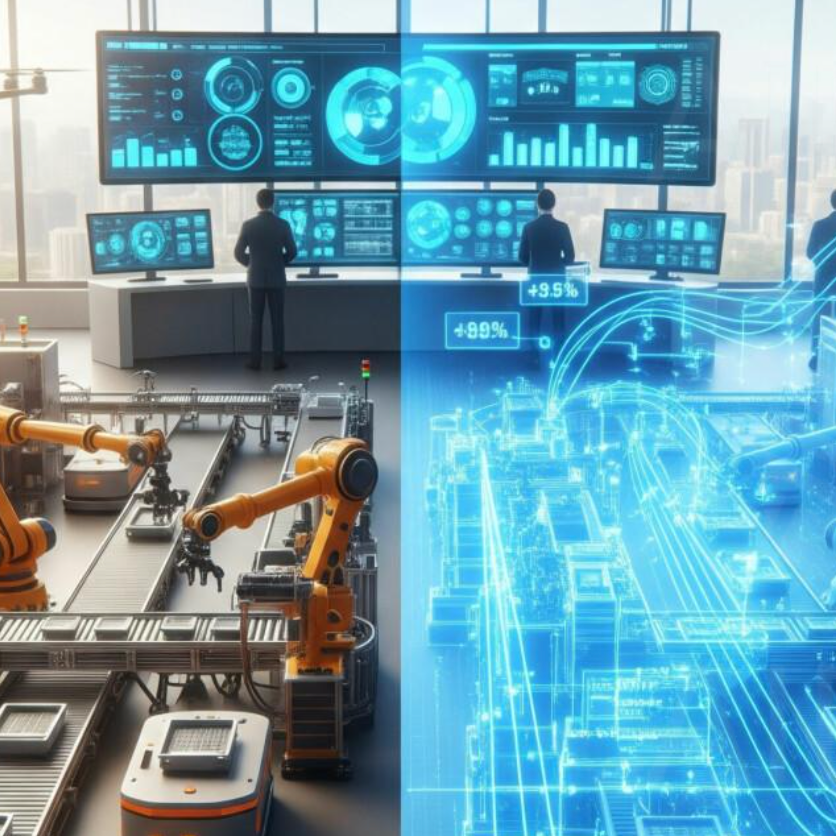
The company opened a new hub in Munich at the end of September. The location focuses on industrial AI and Physics AI and is intended to support enterprise customers in Germany.
That strategy is important.
Germany has one of Europe’s largest industrial economies, with major automotive, energy, aerospace and manufacturing companies.
Mistral wants to place AI directly inside those industries rather than compete only in consumer chatbots.
Why this matters for European companies
For European businesses, the emergence of Vibe provides another option.
Companies increasingly want AI agents that can work with internal information and business applications.
At the same time, many organizations are cautious about sending sensitive information to external AI platforms.
European providers such as Mistral are attempting to turn that concern into a competitive advantage.
The company’s European identity does not automatically make a product more secure or more private. However, it gives Mistral a clear position in the growing debate around technological sovereignty.
The European AI market is changing
Vibe is therefore more than a name change.
It reflects a larger transformation in Europe’s AI market.
European companies are no longer only trying to build alternatives to ChatGPT. They are increasingly building agents that can write software, automate workflows and operate inside businesses.
That could become one of Europe’s most important opportunities.
The continent may not have as many frontier AI laboratories as the United States. Yet if European companies can build highly capable agents around European models, infrastructure and industrial data, they can still capture a significant part of the AI economy.
The next competition may therefore not be about who has the best chatbot.
It may be about who builds the most useful AI worker.






Laat een reactie achter