


October 6, 2026
The global artificial intelligence race is no longer simply a competition between individual technology companies. It has become a strategic contest between economic regions.
The United States, China and Europe are pursuing very different AI strategies. The United States has built an enormous lead in private investment, computing infrastructure and frontier AI companies. China has rapidly narrowed the gap in model performance while building significant strengths in research, patents and industrial deployment. Europe, meanwhile, remains behind in frontier-model development and investment, but is building its own computing infrastructure and has a major advantage that is often overlooked: its industrial economy and ability to deploy AI across a huge single market.
So who is actually ahead?
There is no single answer.
The latest Stanford AI Index shows that US and Chinese frontier models have been trading the lead since 2025. As of March 2026, Anthropic’s leading model had only a 2.7% advantage over the best Chinese model on the benchmark tracked by Stanford. At the same time, the United States still produces more top-tier models and higher-impact AI patents, while China leads in publication volume, citations, patent output and industrial robot installations.
Europe is competing in a different way.
And that could become increasingly important.
The United States still controls the biggest AI investment machine
The clearest American advantage is money.
According to Stanford’s 2026 AI Index, US private AI investment reached approximately $285.9 billion in 2025. Europe was at about $20.9 billion, while China recorded approximately $12.4 billion in private investment.
That difference is enormous.
It means American companies have access to vastly greater amounts of private capital for building data centres, buying AI chips, training models and hiring researchers.
The scale of the American technology industry reinforces the advantage.
Major US cloud companies are spending hundreds of billions of dollars on infrastructure. According to estimates cited by Al Jazeera, US hyperscalers including Amazon, Microsoft, Google, Meta and Oracle are expected to spend around $764 billion in 2026. China’s four major hyperscalers are expected to spend roughly $102 billion.
This spending creates a powerful feedback loop.
More capital allows companies to build more computing capacity.
More computing capacity allows them to train larger and more capable models.
Better models attract more customers.
Those customers generate revenue that can then be reinvested into even more infrastructure.
That is one reason the US remains extremely difficult to catch.
America’s biggest advantage: computing power
AI models require enormous computing resources.
The United States currently has a substantial advantage in this area. Al Jazeera, citing Epoch AI, reports that the US accounts for nearly three-quarters of global AI computing power, while China’s share is slightly above 14%. The US also has thousands of data centres and a much larger concentration of dedicated AI facilities.
The chip ecosystem matters just as much.
Nvidia remains one of the most important companies in the global AI infrastructure market, while American technology companies dominate the cloud platforms on which many AI systems operate.
That gives the US control over several layers of the AI stack.
There are the chips.
Then the data centres.
Then the cloud platforms.
Then the AI models.
And finally the applications built on top.
Few other regions have comparable strength across all of those layers.
China is much closer than many expected
China’s position is different.
The country has faced restrictions on access to some of the world’s most advanced AI chips. Yet Chinese companies have continued to develop increasingly capable models.
Companies including DeepSeek, Alibaba, Moonshot AI and Z.ai have produced models that increasingly compete with leading American systems.
Stanford’s latest AI Index makes the development particularly clear.
The US-China performance gap has effectively closed on several leading benchmarks. American and Chinese companies have repeatedly exchanged the top position since early 2025.
That does not mean the two countries are equal in every dimension.
The US continues to produce more leading frontier models and has substantially greater access to capital and computing.
China, however, has demonstrated that enormous quantities of capital are not the only way to advance AI.
Chinese companies have become particularly competitive in efficient models and open-weight AI.
That matters because cheaper models can spread rapidly.
China’s open-model advantage is becoming important
One of the most interesting developments in the AI race is the growing importance of open-weight models.
These systems can be downloaded, adapted and operated on a company’s own infrastructure.
That can reduce costs and increase flexibility.
Chinese companies have become particularly strong in this segment.
OpenRouter data cited by Al Jazeera shows Chinese models from companies such as DeepSeek, Z.ai and Tencent among the most heavily used models on the platform.
The development has also triggered a response in the United States.
US startup Reflection AI recently launched its Beam model, explicitly positioning it as a competitor to China’s open-weight systems. The company has raised more than $4 billion and is backed by Nvidia.
This suggests that the AI race is entering another phase.
The competition is no longer simply about building the biggest closed model.
It is increasingly about building models that are cheap, efficient, customisable and easy to deploy.
Europe is playing a different game
Europe’s position is much more complicated.
If the AI race is measured by private investment and the number of frontier models, Europe is significantly behind the United States.
Stanford’s figures make that clear.
European private AI investment in 2025 was roughly $20.9 billion, compared with nearly $286 billion in the US.
Europe also produces far fewer leading foundation models.
In 2025, the United States produced 59 notable AI models, compared with 35 from China. France and the UK produced one each, according to figures cited by ECB President Christine Lagarde.
Europe’s computing infrastructure is another weakness.
Lagarde has warned that the US currently holds around 75% of global AI computing capacity, while Europe has around 5%.
Those numbers explain why European policymakers are increasingly talking about AI sovereignty.
Europe cannot easily build competitive AI companies if its companies remain dependent on foreign chips, foreign cloud platforms and foreign foundation models.
But Europe has something the US and China cannot simply copy
Europe’s strength lies elsewhere.
The continent has some of the world’s strongest industrial companies.
Germany has automotive manufacturers and engineering companies.
France has aerospace, defence and energy expertise.
The Netherlands has semiconductor equipment through companies such as ASML.
Sweden, Finland and other Nordic countries have advanced telecommunications and industrial technology.
Europe also has a huge healthcare, pharmaceutical and manufacturing sector.
That creates an opportunity for industrial AI.
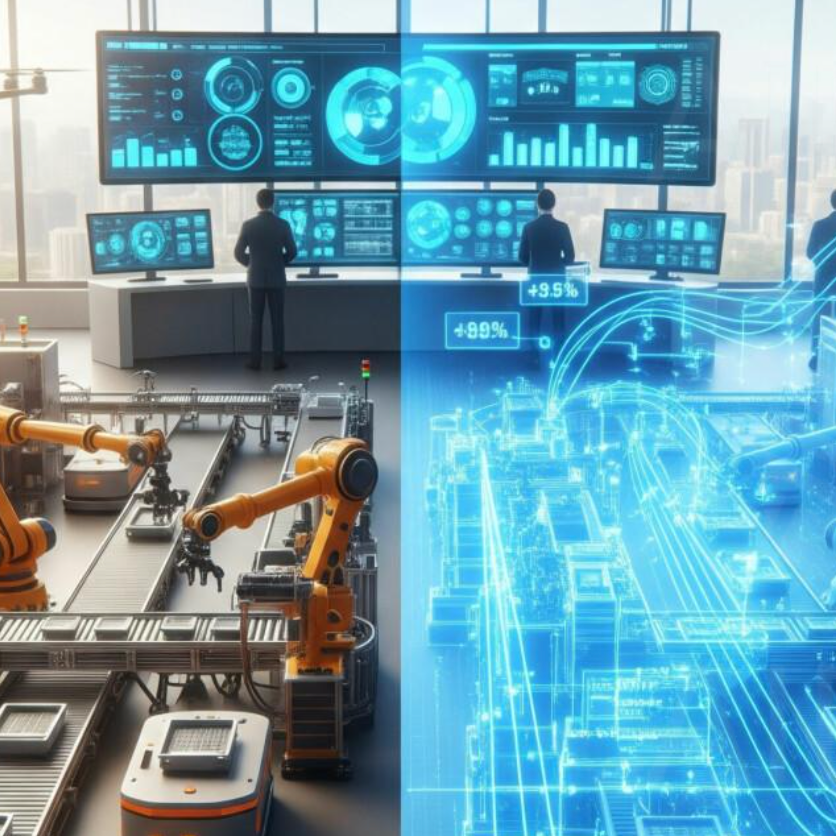
Instead of trying to build the next ChatGPT, European companies can use AI to transform factories, logistics, engineering, medicine, energy and scientific research.
Mistral is already pursuing this strategy.
The French AI company is expanding its industrial AI activities in Germany and has worked with companies such as BMW and Siemens Energy. Mistral is also investing heavily in European computing infrastructure.
That could prove important.
The AI race is not only about who develops the smartest chatbot.
It is also about who gains the most economic value from AI.
Europe is building its own computing infrastructure
Europe is also starting to address its computing disadvantage.
French supercomputer manufacturer Bull has doubled production capacity at its Angers factory as part of Europe’s effort to expand domestic AI computing. The EU has committed billions of euros to AI and supercomputing infrastructure through 2027.
The European strategy includes the development of AI Factories and larger supercomputing systems.
Stanford’s AI Index shows that Europe and Central Asia expanded their number of state-backed AI supercomputing clusters from just three in 2018 to 44 in 2025. China had 85 and North America 41.
Europe therefore isn’t standing still.
The problem is that infrastructure takes time.
The US and China have already accumulated enormous computing capacity.
Europe is trying to close that gap while the technology itself continues to advance.
Regulation: Europe’s strength and its dilemma
Europe has also chosen a different path on regulation.
The European Union introduced the AI Act to establish a risk-based framework for artificial intelligence.
That gives Europe something the US and China do not have in exactly the same form: a common regulatory framework covering a market of hundreds of millions of people.
But regulation also creates a difficult balancing act.
European companies need enough freedom to experiment and scale.
At the same time, governments want strong protections around privacy, safety, transparency and fundamental rights.
The debate is becoming more intense as AI agents become capable of taking actions rather than simply generating information.
Europe therefore faces a fundamental question:
Can it regulate AI while still moving quickly enough to compete?
That question will become increasingly important over the next several years.
The AI race is also a race for talent
Another crucial battlefield is talent.
The United States continues to attract researchers from around the world.
China, meanwhile, produces enormous numbers of technical graduates and has rapidly expanded its domestic research ecosystem.
Stanford reports that China leads the world in AI publication volume, citations and patent output. At the same time, the United States continues to produce more top-tier models and attracts many of the world’s leading AI researchers.
Europe has excellent universities and research institutions.
Its problem is often not the quality of researchers.
It is the ability to retain them and give them access to the enormous amounts of capital and computing required to build frontier AI systems.
That distinction is important.
Europe does not necessarily need more AI scientists.
It needs more ways for those scientists to turn research into globally competitive companies.
The three regions are building different AI ecosystems
The simplest way to understand the current AI race is to look at the different strategies.
| Area | United States | China | Europe |
|---|---|---|---|
| Private AI investment | Extremely high | Growing rapidly | Much lower |
| Frontier models | Very strong | Rapidly approaching US | Limited |
| Computing infrastructure | Very strong | Strong and expanding | Expanding |
| AI research | Very strong | Very strong | Strong |
| Open-weight models | Growing rapidly | Major strength | Growing |
| Industrial AI | Strong | Strong | Major opportunity |
| Regulation | More fragmented | State-led approach | EU-wide framework |
| AI sovereignty | High strategic focus | High strategic focus | Increasing priority |
| Global AI companies | Numerous | Increasing | Relatively few |
The table also shows why declaring a single winner is misleading.
Each region has different advantages.
The biggest race may actually be AI adoption
There is another metric that receives far less attention.
How quickly are businesses actually using AI?
Stanford’s 2026 AI Index reports that organisational AI adoption reached 88% globally in 2025. Europe actually recorded the highest regional adoption rate at 91%, ahead of North America at 90%.
That is an important statistic.
Europe may not be producing as many frontier models as the United States.
However, European businesses are adopting AI at extremely high rates.
This changes the question.
If AI ultimately becomes a general-purpose technology like electricity, computers or the internet, the economic winners may not necessarily be the countries that invented the best model.
They may be the countries that integrate AI most effectively into their economies.
Europe could therefore compete without winning the model race
This is where the European strategy becomes particularly interesting.
Reuters recently argued that Europe could benefit significantly from the AI boom even though it trails the US in frontier AI development.
The reason is adoption.
European companies could increasingly use inexpensive open models and AI services to improve productivity without having to develop the underlying foundation models themselves.
That is a very different strategy from trying to beat OpenAI, Google or Anthropic at their own game.
Europe could instead become exceptionally good at applying AI.
Factories could become more autonomous.
Hospitals could automate administrative work.
Engineers could use AI for design and simulation.
Financial institutions could automate analysis.
Small companies could deploy AI agents without building their own models.
The value generated by those applications could be enormous.
The next five years will determine Europe’s position
The current situation is therefore not simply:
America wins. China catches up. Europe loses.
The reality is considerably more complicated.
The United States currently has the strongest combination of capital, chips, cloud infrastructure and frontier-model companies.
China has demonstrated extraordinary speed in closing the model gap and has developed major strengths in research, patents, robotics and open-weight AI.
Europe has fewer frontier models and much less private investment, but it has industrial depth, high AI adoption, strong research institutions and a rapidly expanding public AI infrastructure.
The real question for Europe is not whether it can suddenly reproduce Silicon Valley.
It is whether it can turn its existing strengths into a competitive AI economy.
That means building more computing capacity.
It means scaling European AI companies.
It means keeping researchers and engineers in Europe.
It means investing in industrial AI.
And it means ensuring that regulation does not become disconnected from technological reality.
The AI race is no longer one race
Perhaps the biggest misconception is that there is only one AI race.
There are actually several.
There is a race to build the most capable model.
There is a race to control computing infrastructure.
There is a race to produce the best chips.
There is a race to develop AI agents.
There is a race to deploy AI across industry.
There is a race for talent.
And there is a race to capture the economic value created by AI.
The United States currently has enormous advantages in several of these races.
China is rapidly closing gaps in others.
Europe has a narrower but potentially powerful path based on industrial deployment, infrastructure, research and adoption.
The outcome will therefore not necessarily be decided by whoever produces the next benchmark-topping model.
It may ultimately be decided by who turns artificial intelligence into the greatest amount of real-world economic and technological capability.
And that race has only just begun.
Sources:
Stanford HAI – 2026 AI Index Report
Stanford HAI – 2026 AI Index: Economy
Stanford HAI – 2026 AI Index: Policy and Governance
Reuters – Why Europe could be the real winner of the AI boom
Reuters – European AI computing and Bull
Reuters – Germany’s AI startup boom










Laat een reactie achter