

October 1, 2026
Europe is entering a new phase in the global artificial intelligence race.
For years, the continent focused mainly on regulating AI. Now, however, European governments and companies are putting more emphasis on building AI infrastructure themselves.
That shift is changing the European technology landscape.
France’s Mistral AI is expanding across the continent. The European Commission is pushing new measures for AI, cloud and semiconductor infrastructure. At the same time, European companies are investing in local computing capacity.
The goal is becoming increasingly clear: Europe wants more control over the technology it uses.
Europe wants more than imported AI
The European Union does not want European companies to depend entirely on foreign AI platforms.
Instead, policymakers are pushing for stronger domestic capabilities in areas such as artificial intelligence, cloud computing, semiconductors and open-source technology.
In June, the European Commission presented a technology sovereignty package covering AI, cloud infrastructure, semiconductors and open source. The plan aims to strengthen Europe’s digital autonomy and increase the continent’s ability to develop critical technologies.
This strategy is important because AI now depends on much more than software.
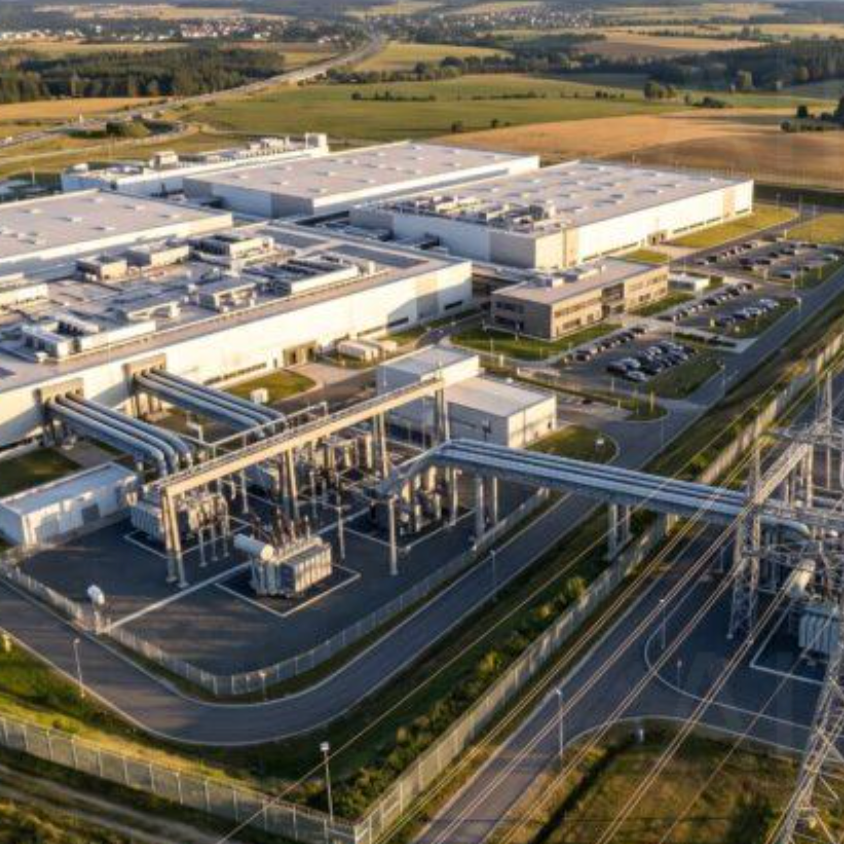
Modern AI systems require huge amounts of computing power. They also need data centers, advanced chips, cloud infrastructure and reliable energy.
Consequently, controlling the AI model alone is not enough.
Mistral is becoming Europe’s most visible AI champion
One company sits at the center of this European strategy: Mistral AI.
The French company recently raised €3 billion in a Series D funding round. The investment valued Mistral at more than €21 billion. According to the company, the funding will support frontier research, computing capacity, infrastructure and international expansion.
Mistral is also expanding its physical presence across Europe.
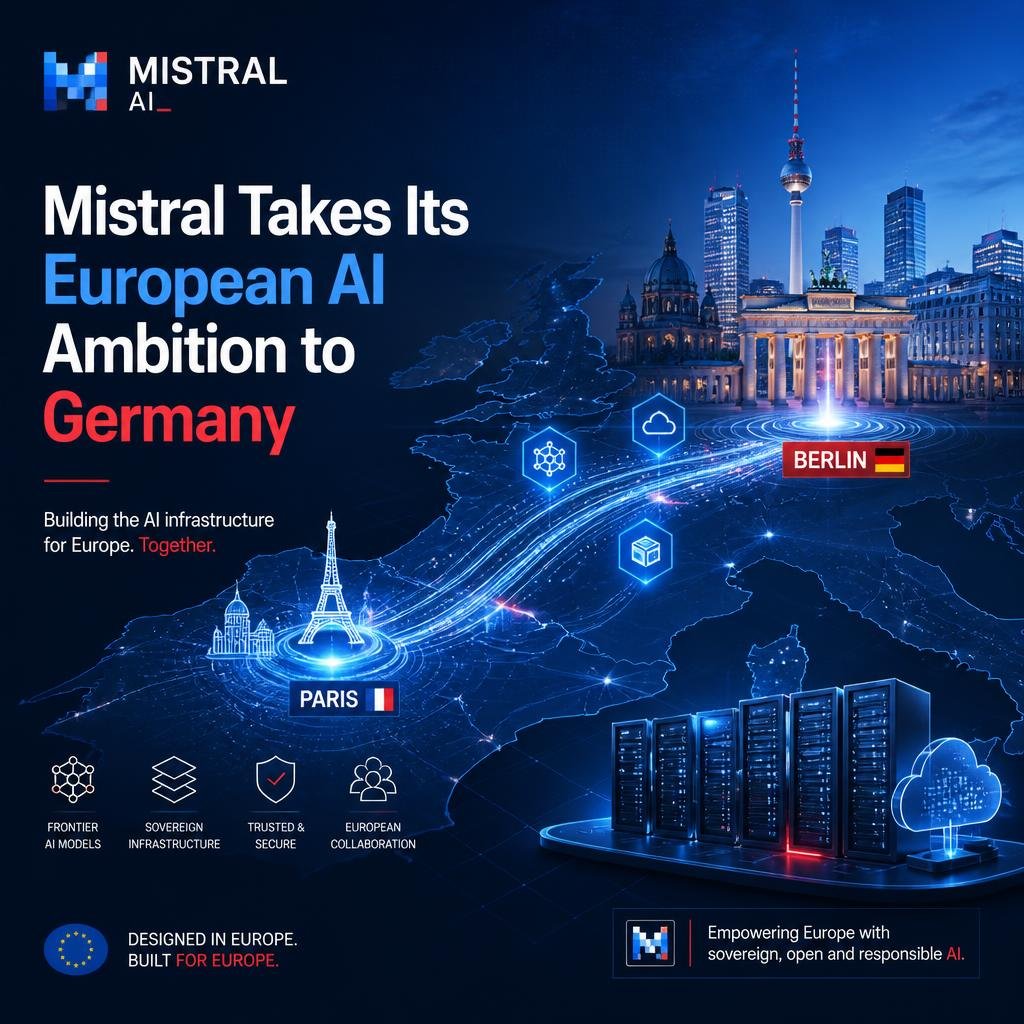
In September, the company opened a new hub in Munich. The location will focus on Physics AI and Industrial AI. It will also include engineers working directly with enterprise customers.
That choice of location is significant.
Germany is Europe’s largest industrial economy. The country has major automotive, aerospace, energy and manufacturing industries.
As a result, Munich gives Mistral direct access to companies with complex engineering problems and large amounts of proprietary data.
The next AI battle could happen inside factories
Until recently, most AI competition focused on chatbots.
OpenAI, Google, Anthropic and other companies competed to build systems that could answer questions, write text and generate code.
Industrial AI is different.
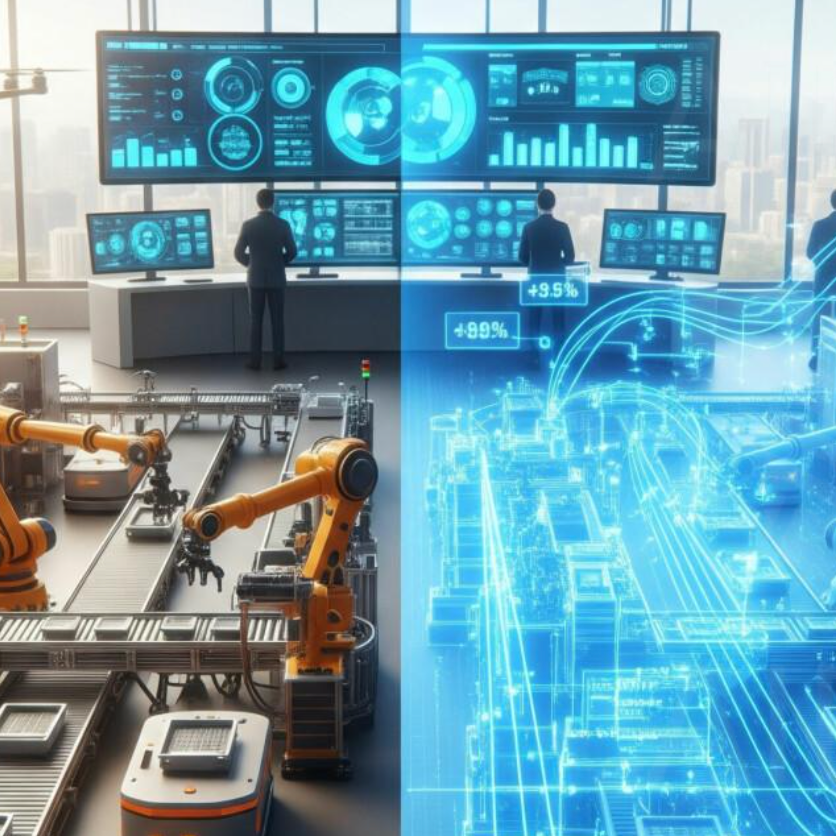
Factories and engineering companies need systems that understand physical processes. These can include fluid dynamics, material deformation, thermal behaviour and mechanical stress.
Mistral says its Munich team is working on precisely these areas. The company is already collaborating with BMW on crash simulations and engineering AI. It is also working with Siemens Energy on industrial AI applications.
That could become a major European advantage.
The continent has a large industrial base with decades of specialized knowledge. If AI companies can turn that knowledge into useful models, Europe could create a strong position in industrial AI.
Sovereignty also means controlling the infrastructure
However, building European AI models is only one part of the challenge.
The underlying computing infrastructure matters just as much.
Mistral says it wants to build one gigawatt of European computing capacity by 2030. The company argues that customers need control over their data, models and computing infrastructure.
This reflects a wider European concern.
If an AI system runs entirely on infrastructure controlled outside Europe, European organizations may have less control over where their data is processed.
They may also face greater dependence on foreign providers.
For governments and heavily regulated industries, that can become a strategic issue.
The EU is building its own definition of AI sovereignty
Europe is now trying to address this problem through policy as well.
The European Commission’s technology sovereignty package covers several parts of the digital economy. It includes semiconductor capacity, cloud and AI infrastructure, open-source technology and the digitalization of the energy sector.
Importantly, the EU is not defining sovereignty simply as owning a European AI company.
Instead, the concept is becoming much broader.
The European Commission’s cloud sovereignty framework includes criteria covering data location, access control, auditability and the ability to keep AI models and data pipelines under European control.
In other words, sovereignty increasingly means controlling the complete technology chain.
Mistral is betting on open models
Another important part of Mistral’s strategy is its use of open-weight models.
The company says customers can run its models on their own infrastructure. They can also adapt those models to their own data and workflows.
That approach is different from traditional closed AI services.
With a closed model, customers normally depend on the provider’s infrastructure and product roadmap.
Open-weight models can give organizations more control over deployment.
For European companies, that distinction could become increasingly important.
A bank, manufacturer or government agency may want to run AI in a controlled environment. In some cases, it may not want sensitive information to leave its own infrastructure.
Europe still faces a major computing challenge
Despite these efforts, Europe has a difficult problem to solve.
Building AI infrastructure requires enormous amounts of capital, energy and advanced hardware.
The continent also faces strong competition from the United States and Asia.
Therefore, European AI sovereignty cannot be achieved simply by funding startups. Europe also needs data centers, semiconductor capacity and access to advanced computing.
The European Commission’s new technology sovereignty package specifically addresses these areas. It includes measures intended to strengthen semiconductor production and expand cloud and AI capacity across the EU.
That makes the policy shift significant.
Europe is beginning to treat AI infrastructure as strategic infrastructure.
Germany could become a major AI testing ground
Germany is particularly important in this strategy.
The country’s industrial sector generates enormous amounts of technical knowledge. Automotive companies, energy firms and engineering groups all have highly specialized processes.
Mistral’s Munich hub is designed to work directly with this industrial ecosystem. The company is also partnering with the Technical University of Munich on research involving digital twins and automotive aerodynamics.
This could create a new model for European AI development.
Instead of building a general chatbot first and searching for customers later, AI companies can work directly with industrial partners.
That approach allows models to be developed around real-world problems.
Europe is also building alternatives to foreign AI infrastructure
Mistral’s strategy extends beyond Germany.
In August, the company announced regional inference options that allow customers to choose whether their AI processing takes place in Europe or the United States. Mistral also introduced a priority service with committed service levels for mission-critical workloads.
Furthermore, the company is working with other technology providers to support AI deployment inside controlled environments.
For example, Mistral and Cloudera announced a partnership in September aimed at allowing enterprises to deploy Mistral models across private cloud, public cloud and on-premises environments.
The direction is clear.
European businesses increasingly want AI that can fit into their existing infrastructure rather than forcing them into a single external platform.
The bigger European AI strategy
Mistral is only one part of this larger movement.
Across Europe, policymakers are trying to strengthen domestic capabilities. Meanwhile, companies are looking for ways to reduce dependence on foreign technology providers.
The strategy is not necessarily about cutting Europe off from American technology.
Instead, Europe appears to be seeking more choice.
European companies can continue using American AI platforms. At the same time, they could have European alternatives for sensitive or strategic workloads.
That flexibility may become increasingly valuable.
The real test will be adoption
Ultimately, Europe’s AI strategy will be judged by what companies actually use.
Building models and data centers is only the first step.
European AI companies must still convince businesses that their technology can compete on performance, price, reliability and ease of deployment.
That will not be easy.
American technology companies have enormous financial resources and established global ecosystems. They also control many of the world’s most widely used AI platforms.
Nevertheless, Europe has an important asset of its own.
It has a huge industrial economy, major research institutions and companies with highly specialized technical knowledge.
If European AI companies can combine those strengths with competitive models and local infrastructure, the continent could establish a distinctive position in the global AI market.
Europe’s AI race is becoming an infrastructure race
The European AI story is therefore changing.
It is no longer only about whether Europe can build a chatbot that competes with ChatGPT.
Instead, the bigger question is whether Europe can build enough of the AI stack to maintain meaningful control over its digital future.
That includes models, chips, data centers, cloud infrastructure, energy and industrial applications.
Mistral’s expansion into Germany shows what that strategy could look like in practice. The EU’s technology sovereignty plans show that policymakers are moving in the same direction.
For now, Europe is still catching up with the United States in several parts of the AI infrastructure race.
However, the strategy is becoming much more concrete.
And as AI moves deeper into factories, governments and critical industries, control over the technology behind those systems could become just as important as the intelligence of the models themselves.






Laat een reactie achter