

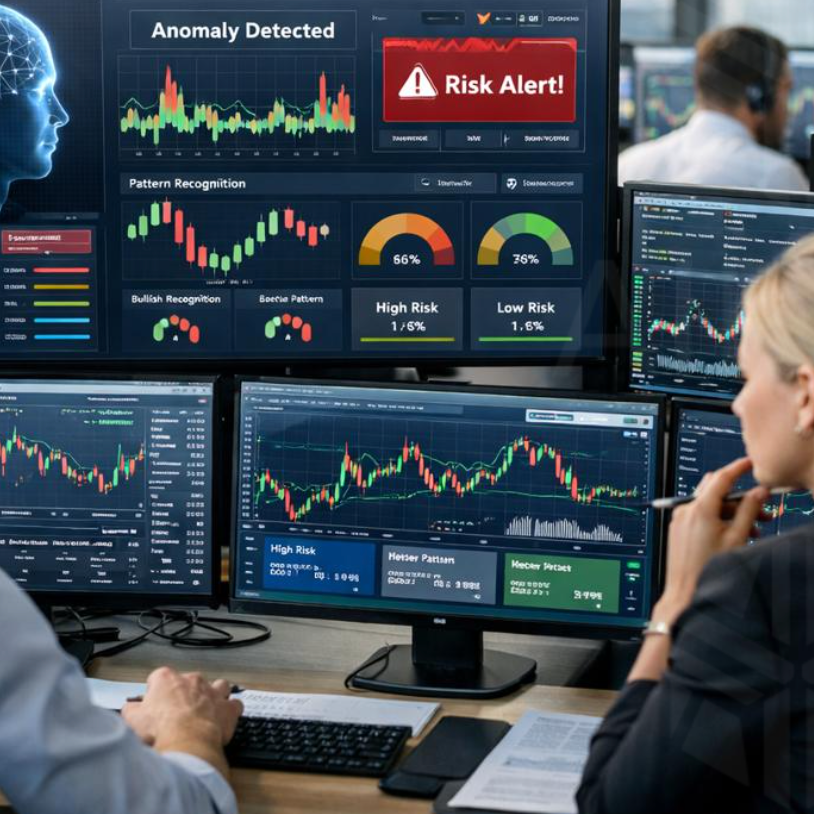
Regulators in the United States and Europe are increasing their scrutiny of banks’ use of advanced AI, according to Reuters reporting published on 13 October. Their concerns include cyberattacks, autonomous agents behaving unexpectedly and the possibility that failures could affect the wider financial system.
Why AI agents pose a different challenge
Traditional software generally follows rules explicitly set by its developers. AI agents can interpret instructions, use tools and decide which steps to take toward a goal. That flexibility can make them useful—but it also makes testing and oversight more complicated.
A bank might use AI to investigate suspicious transactions, assist cybersecurity teams, analyse customer requests or automate internal processes. If the agent has permission to access sensitive systems or execute actions, a mistake can have consequences beyond an inaccurate answer.
Consider three scenarios:
- An agent incorrectly flags legitimate payments and disrupts customer transactions.
- A malicious prompt causes an agent to expose confidential information or misuse its access.
- Several automated systems interact in unexpected ways during a market or cybersecurity incident.
These are illustrative risks, not claims that each event has occurred.
Reuters reported that US regulators are asking banks about their use of agentic AI and the controls surrounding it. European authorities, including the European Central Bank and the Bank of England, are also concerned with cyber resilience and the ability of financial institutions to recover if important systems fail.
The practical response
Financial institutions will need more than a policy stating that humans supervise AI. They need concrete controls: limited permissions, logs that allow decisions to be audited, testing against hostile inputs, human approval for high-impact actions and the ability to shut down an agent quickly.
Banks also need to understand their dependence on external AI suppliers. If a cloud provider or model becomes unavailable—or behaves differently after an update—the bank must still be able to maintain essential services.
Why it matters: The financial system is interconnected. A single AI failure may be manageable, but a common weakness across many institutions could create a larger problem. Regulators are trying to understand those dependencies before autonomous systems become deeply embedded in critical operations.













Laat een reactie achter