

September 28, 2026
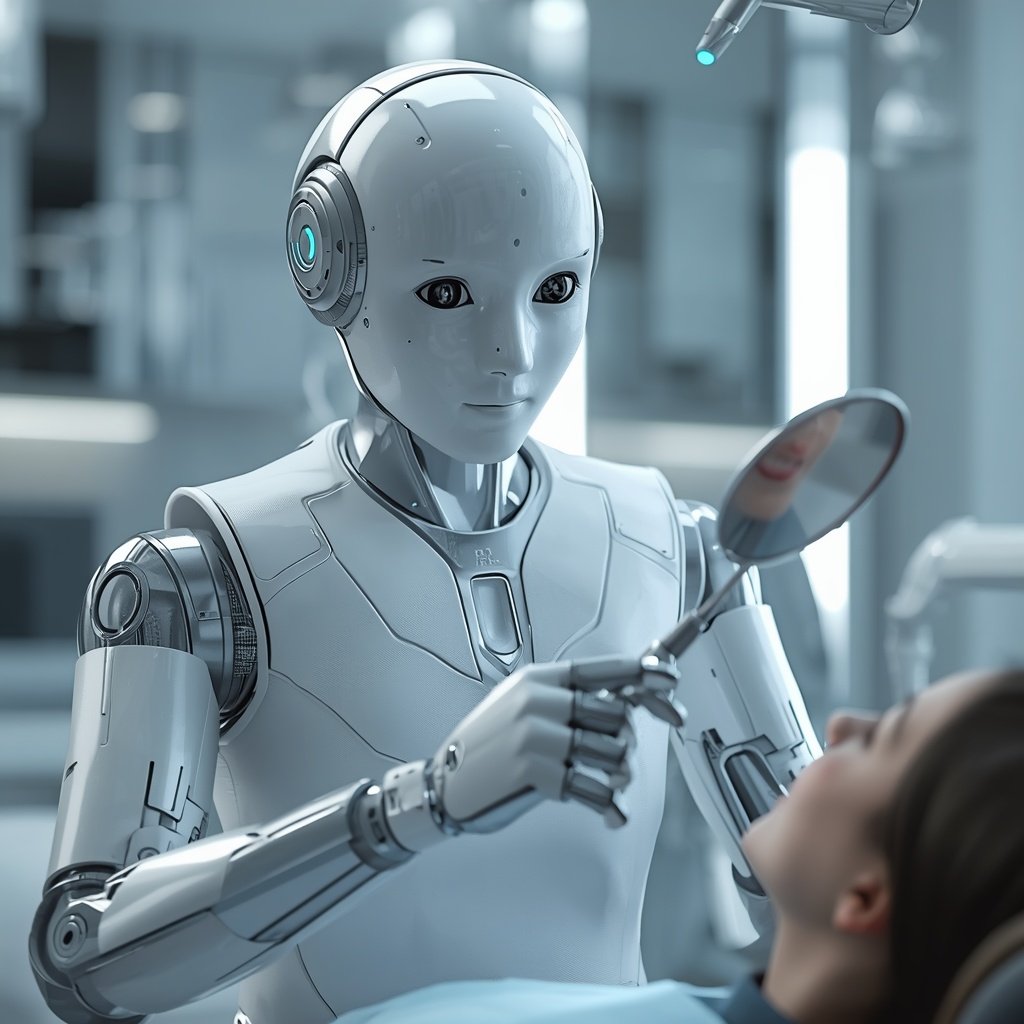
The humanoid robot revolution has arrived at the dentist.
But it is not drilling teeth.
It is not holding surgical instruments.
And it is not replacing the dentist.
Instead, a humanoid robot called FF Master has been deployed at Wonderful Life Dental Group in Los Angeles to handle the part of healthcare that happens before anyone sits in the dental chair: reception, patient check-in, appointment lookup, assistance and wayfinding.
That might sound less futuristic than a robot performing surgery.
It may actually be more important.
Because the first wave of humanoid robots entering healthcare is unlikely to begin with the most complicated medical procedures.
It is likely to begin with everything surrounding them.
The robot is starting at the front desk
Faraday Future announced in June that it had delivered an FF Master humanoid robot to Wonderful Life Dental Group in Los Angeles.
The company described the deployment as its first real-world healthcare implementation.
The robot’s responsibilities are deliberately administrative.
It can support patient check-in, look up appointments, assist at reception and provide wayfinding guidance. Faraday Future explicitly stated that the robot would avoid clinical and medical procedure areas.
That limitation is important.
The robot is not practicing dentistry.
It is effectively becoming an extremely unusual receptionist.
And that is precisely what makes the deployment interesting.
Healthcare has an enormous amount of “non-medical” work
When people imagine AI in healthcare, they tend to think about diagnosis, medical imaging or drug discovery.
But healthcare organizations also contain huge amounts of administrative work.
Patients have to check in.
Appointments have to be found.
People need directions.
Forms have to be handled.
Questions need answering.
Visitors need assistance.
Languages need to be translated.
Staff members repeatedly explain the same processes.
None of these tasks require a robot to perform surgery.
They do, however, require a system that can communicate with people and operate in a physical environment.
That is where humanoid robotics starts to make sense.
Why use a humanoid robot at all?
A reasonable question is why a dental office would need a human-shaped machine.
A tablet could handle check-in.
A screen could display directions.
A chatbot could answer questions.
A traditional service robot could move around a building.
Humanoid robots are interesting because they combine several capabilities into one physical system.
They can move through spaces designed for humans.
They can interact face-to-face.
They can use voices and displays.
They can potentially manipulate physical objects.
And they can provide a visible point of interaction.
That last part is difficult to quantify but increasingly relevant.
People understand how to interact with something that looks and behaves like an assistant.
The novelty is part of the product
Faraday Future’s own material around the deployment emphasizes the interaction between the robot and patients.
The company says FF Master can communicate in more than 50 languages and is designed for reception and guidance applications.
A dental practice also provides an unusual environment for testing human-robot interaction.
People may arrive nervous.
Some are children.
Some may speak limited English.
Some are elderly.
Some are unfamiliar with the building.
And almost everyone has to wait at some point.
That means the reception area is not simply an information desk.
It is a social environment.
The robot has to function in that environment without making the experience more frustrating.
The waiting room may become the first battlefield for humanoids
There is a broader pattern emerging here.
Humanoid robots do not necessarily need to start by replacing highly skilled professionals.
They can begin by filling small gaps around them.
A robot at a hotel might greet guests.
A robot at an airport might provide directions.
A robot at a retail store might answer questions.
A robot at a hospital might help visitors find departments.
A robot at a dental office can help people get checked in.
These are relatively narrow jobs.
But they all have something in common:
they require a machine to exist in the physical world.
A chatbot cannot walk someone down a hallway.
A touchscreen cannot recognize that a visitor is standing in the wrong place.
A traditional software system cannot physically approach someone who needs assistance.
That is the gap humanoid robotics is trying to fill.
This is not yet a replacement story
It is tempting to look at a humanoid robot working reception and immediately ask how many employees it could replace.
That is not what this deployment demonstrates.
The robot’s role is described as support for front-desk operations, not as a complete replacement for dental staff.
That distinction matters.
Real-world robotics is rarely as simple as “robot arrives, human disappears.”
Businesses still need people to manage exceptions, deal with sensitive situations, supervise systems and perform tasks machines cannot yet reliably handle.
The more immediate question is whether robots can absorb repetitive parts of a job.
If they can, human workers may spend more time on tasks requiring judgment, empathy or specialized expertise.
Whether that ultimately changes staffing levels will depend on cost, reliability, regulation, workflow design and the economics of individual businesses.
The hardware is becoming surprisingly capable
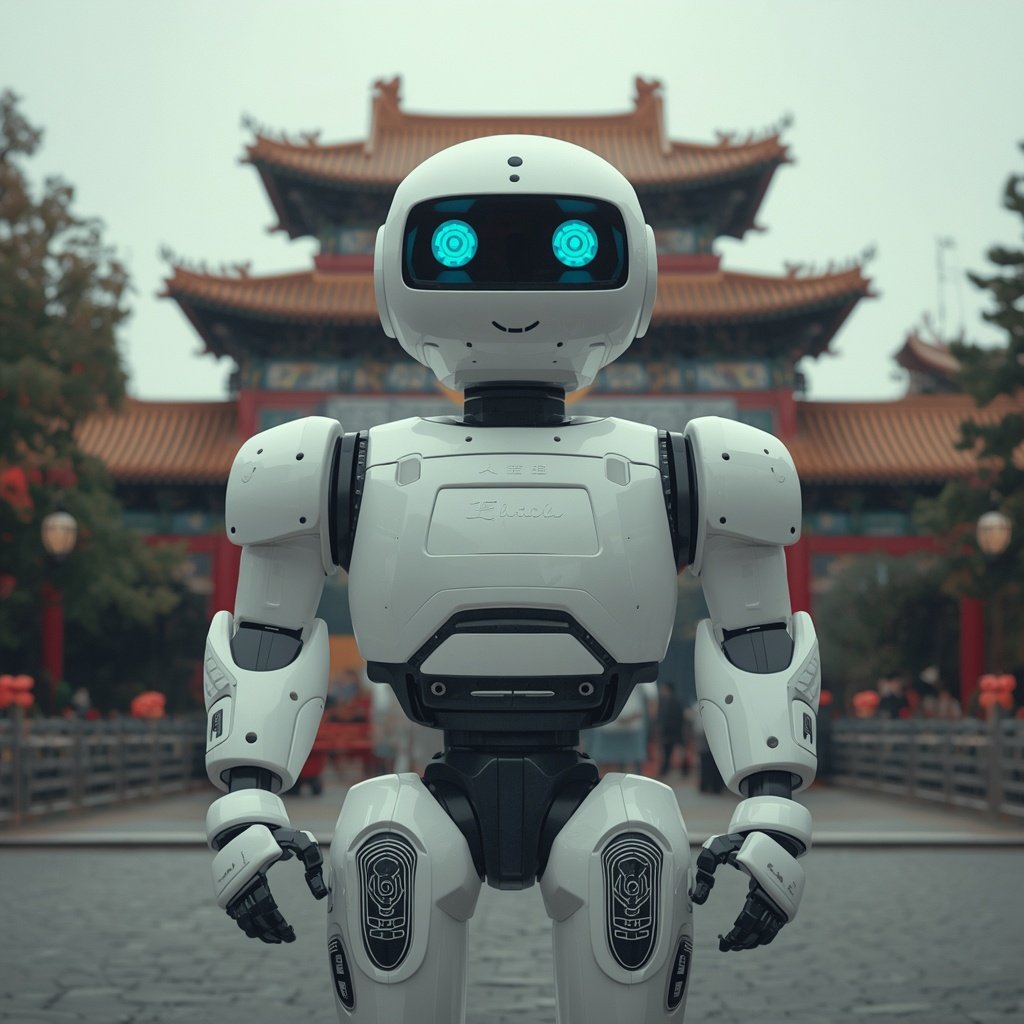
Faraday Future’s current FF Master product is positioned as a full-size humanoid robot for professional applications. The company’s published specifications include autonomous navigation, multimodal interaction and dexterous manipulation capabilities, alongside onboard computing and multiple perception systems.
The important point is not any single specification.
It is the convergence of capabilities.
A modern service humanoid needs to see.
It needs to hear.
It needs to understand language.
It needs to navigate.
It needs to move safely around people.
And it needs to respond in real time.
That is essentially an AI system being placed inside a physical body.
Healthcare makes the safety question unavoidable
Putting robots around patients also introduces a different level of scrutiny.
A robot in a warehouse can be separated from people.
A robot in a dental waiting room cannot.
It has to operate around children, elderly patients and people who may be distracted, stressed or physically vulnerable.
That makes navigation and interaction safety essential.
There are also privacy questions.
A reception robot may hear conversations.
It may process appointment information.
It may interact with patient records.
It may use cameras and microphones.
As these systems become more deeply integrated into healthcare environments, security and privacy become just as important as the robot’s ability to walk.
The strange psychology of meeting a robot at the dentist
There is also something almost comical about the situation.
The dentist is traditionally an environment where people already feel slightly uncomfortable.
Now imagine walking into the reception area and being greeted by a humanoid robot.
For some patients, that could be entertaining.
For others, it could be unsettling.
For children, it could become the most memorable part of the visit.
And for the dental practice, it creates something else:
attention.
Faraday Future has highlighted patient interaction with the robot, including people speaking with it and asking it to perform actions such as dancing.
That illustrates another emerging role for humanoid robots.
They are not only machines.
They can become part of a company’s customer experience.
The real test begins after the novelty disappears
The first few weeks of a robot deployment are easy to make exciting.
Everyone wants to see it.
People take videos.
Visitors ask questions.
Employees experiment with it.
But commercial robotics is ultimately about what happens months later.
Does the robot remain reliable?
Does it reduce repetitive workload?
How often does it need human intervention?
How much maintenance does it require?
Does it genuinely improve the patient experience?
Does it justify its cost?
Those are much harder questions.
And they are the questions that will determine whether humanoid robots become a normal part of healthcare or remain expensive demonstrations.
The bigger transformation may happen around the doctor, not instead of the doctor
The dental robot provides a useful glimpse into how physical AI may enter professional environments.
The first generation may not replace the expert.
It may surround the expert.
Robots could handle reception.
They could transport supplies.
They could guide patients.
They could move equipment.
They could clean or restock areas.
They could perform repetitive physical tasks.
Humans would remain responsible for the complicated work requiring professional judgment.
That could be a much more realistic path toward adoption than the idea of an autonomous robot doctor.
The dentist is only the beginning
The significance of FF Master at a Los Angeles dental practice is therefore not that a robot has entered medicine.
It is that humanoid AI has entered the everyday workflow around medicine.
That is a much bigger category.
If robots can reliably operate in reception areas, hospitals, clinics, hotels, airports and retail environments, the industry gains something it has never really had before: a general-purpose physical interface for AI.
Software can already answer questions.
Robots are beginning to move through the world and act on those answers.
That combination is what makes embodied AI different from another chatbot.
And the first place many people encounter that future may not be a factory or a research laboratory.
It may be while sitting in a dental waiting room, wondering why the receptionist has two legs and a battery.



Laat een reactie achter